Computer skills from scratch·Spreadsheets and sharing·Lesson 75 of 180
A one-page CV that is honest
 Ellis Dennis GrahamFounder, Cyber Elias Academy 2026-07-18 3 min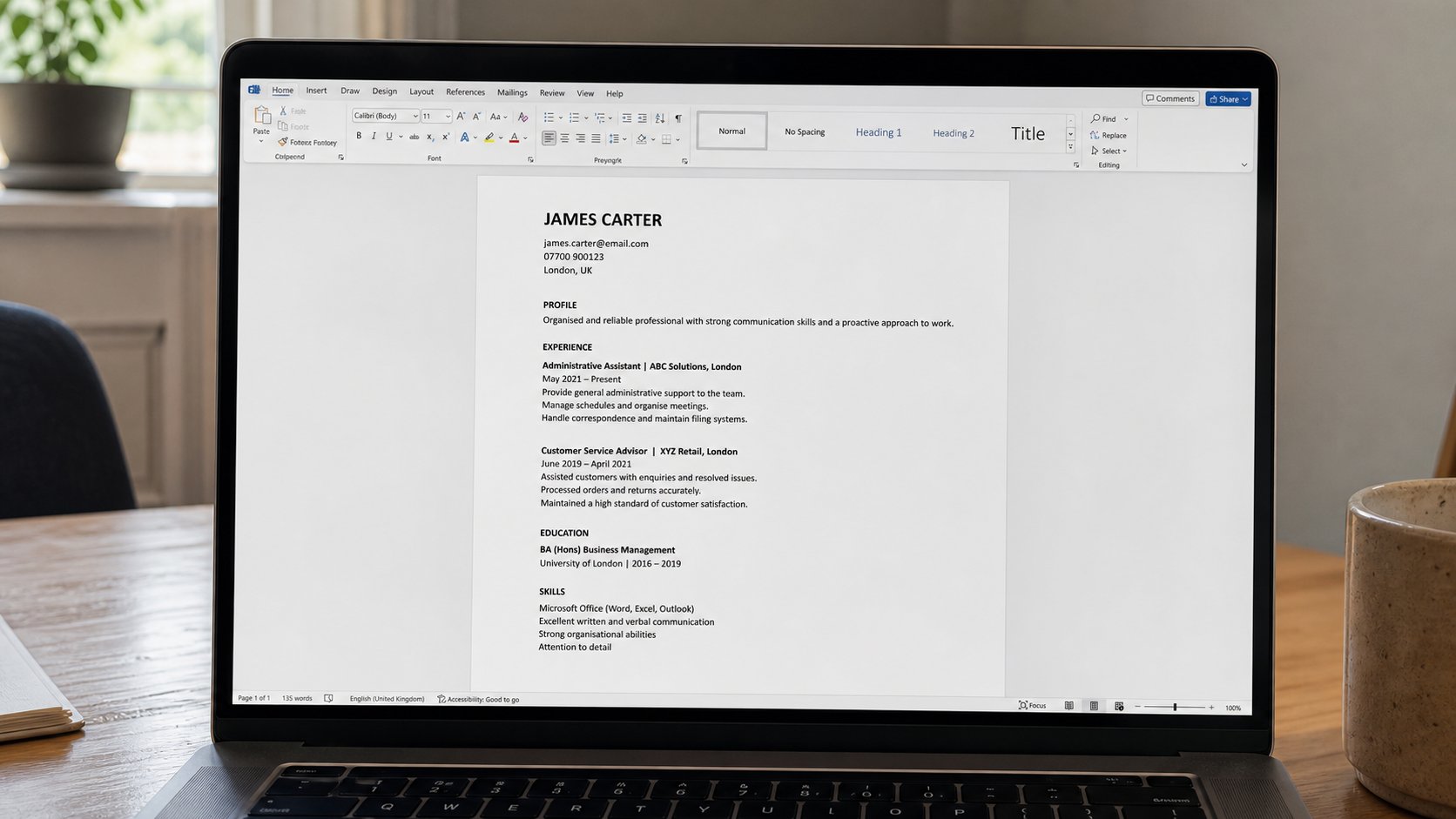
A CV is a letter about work you have actually done. One page, real dates, a number that rings. Empty years are allowed. Invented jobs are not.
A CV is not a poster of who you wish you were. It is a one-page letter that says your name, how to reach you, and what you have actually done — school, a shop, a church role, a computer course you finished. Shops sell templates with gold lines and a photograph that ate the margin. Offices in this city still read a quiet page. This lesson is that page in Word, with the bones you already have: one typeface, a list, the truth.
Name at the top, large enough to read, not a banner. Next line: phone, email you can open — the address you made on purpose. Then a short sentence if you must: Seeking computer basics work, or Available for shop and office tasks. Then headings: Education, Experience, Skills. Education can be SSCE, a year, a school that exists. Experience can be “helped at a family stall, 2024–2025” or “completed Computer Basics at Cyber Elias Academy, Port Harcourt.” Skills: things you can do at a desk this week — email, Word, Excel totals, not “Microsoft Office Suite Guru.” If you cannot demonstrate it on a machine, it is not a skill yet.
Dates, gaps, and what to leave off
Year–year is enough. Do not invent a job to fill 2023. A gap is ordinary. A lie is a conversation you will lose in the room. Do not put a BVN, a home address if you are not asked, a photograph unless they asked, a date of birth unless they asked. Do not put a motivational quote. Do not put “references available on request” if you have no one to name; name one person who will pick up, with their permission, or omit the line.
Bullets, not a novel. Two or three lines under each role: what you did, in verbs you can stand by — received customers, kept a fee book in Excel, typed letters. Spell check, then read aloud. Your name must be spelled as on your ID. Save as yourname-cv-2026.docx, then PDF. Send the PDF unless they asked for Word. You know why.
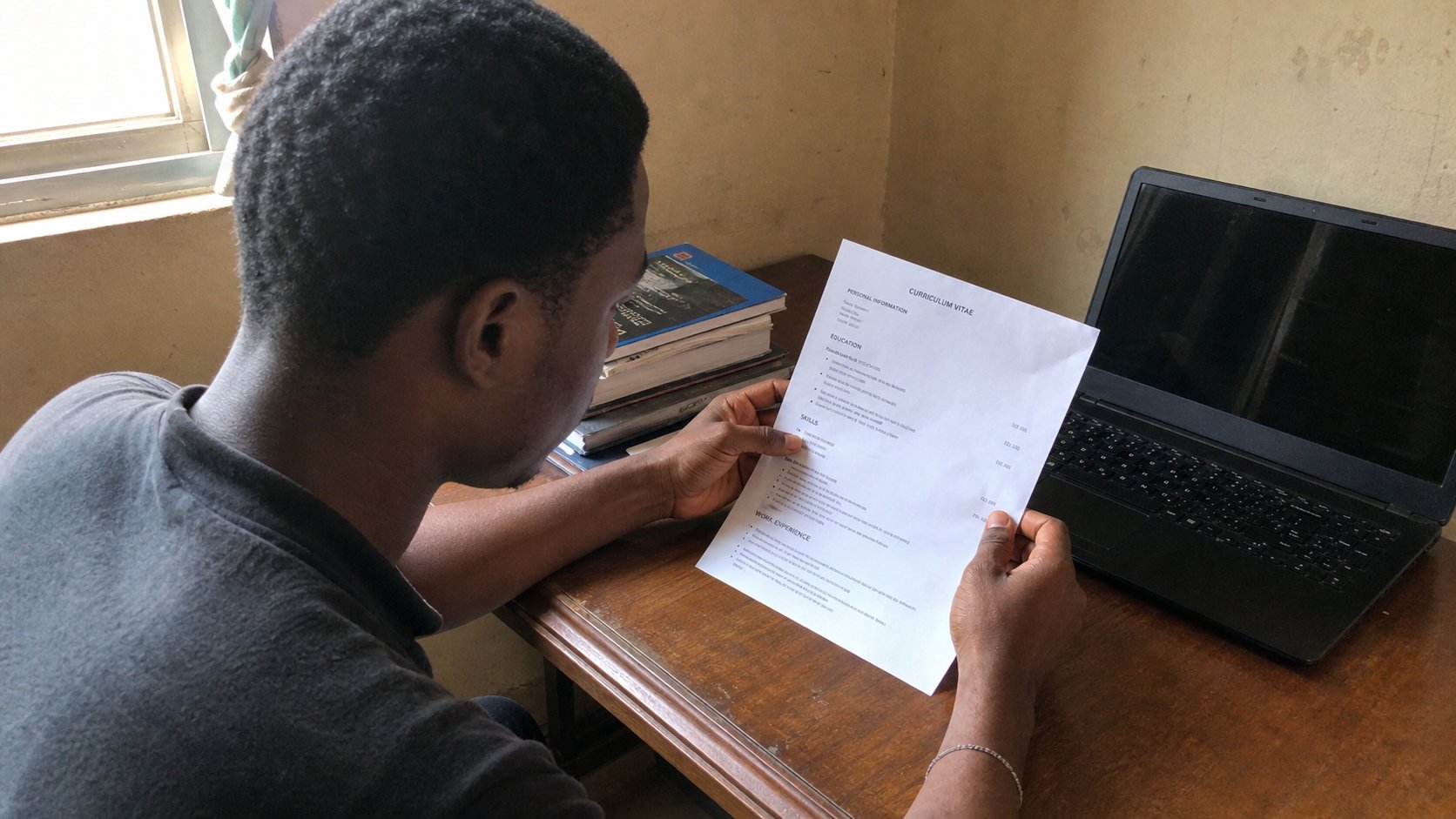
- One page in Word. Name, phone, email, Education, Experience, Skills.
- Three true bullets under one real thing you have done.
- Spell check. Read aloud. PDF. Open the PDF. Confirm it is one page.
- Do not download a “professional CV builder” from an advert. Word is enough.
When they asked for two pages, and when they asked for a form
Some offices want their own form. Fill the form. Attach the CV if they said so, not instead. Some public-sector processes want NYSC, certificates, a longer pile. That pile is not this one page; it is a folder, School or Work, named. The one page is the door. The folder is the house. Do not email the whole house unasked.
A CV is a letter with a longer memory. It should still look like something you would sign. When the page is quiet and true, it is done. Update it when something real happens — a course finished, a role ended — not every Saturday. The file lives in Documents/Work or School, backed up, like anything you would cry about. You already know that part. The new part is refusing to invent a life to fill a margin.