Computer skills from scratch·The pocket and the purse·Lesson 164 of 180
The ATM, the POS, and the card manners
 Ellis Dennis GrahamFounder, Cyber Elias Academy 2026-08-27 4 min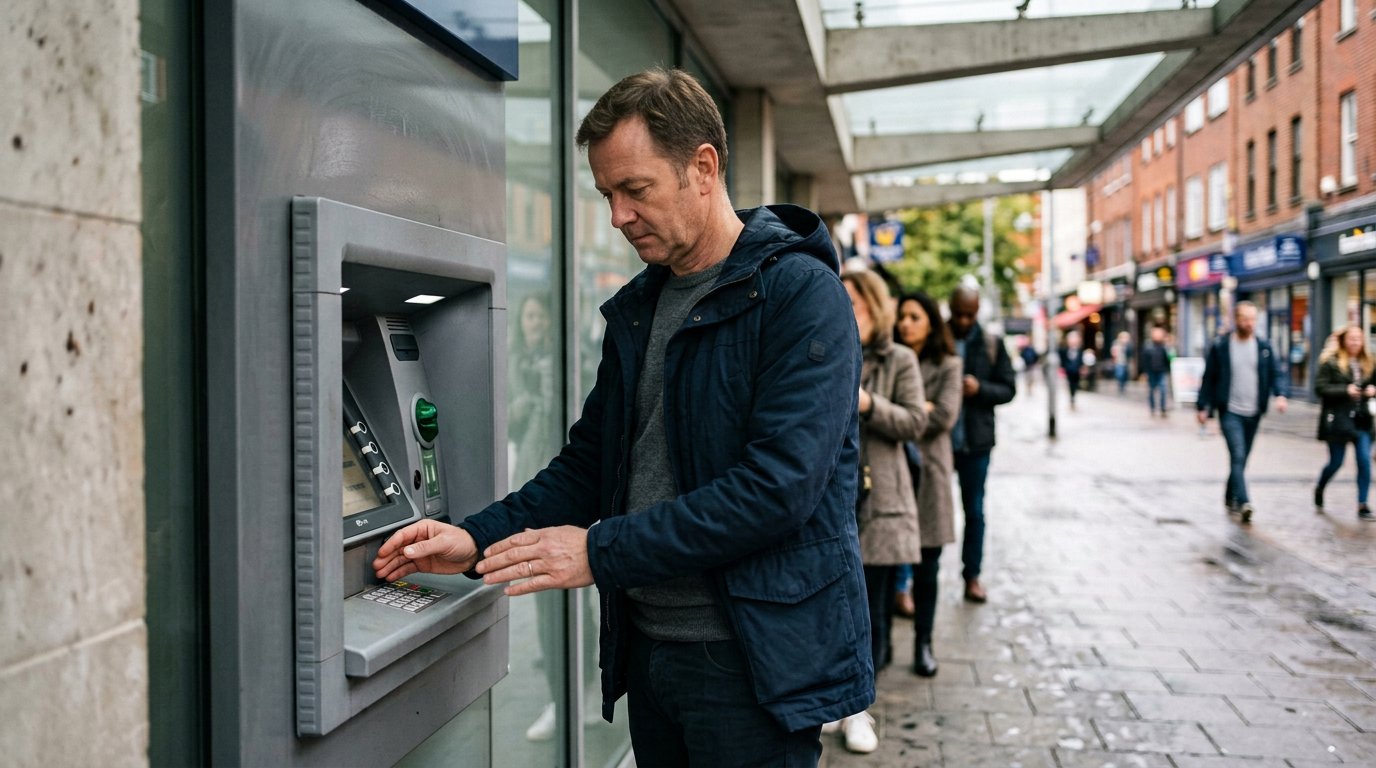
The queue under the umbrella, the slot that wiggles, the keypad worth covering: cash machines done correctly, the market POS done politely, and the card that gets frozen in one tap.
The queue at the bank's wall on a Friday is its own small nation: umbrellas, expectations, the man counting his notes twice, the machine humming behind the bars. The cash machine carried your money across the country while you slept, and it asks in return for a handful of manners — not because the machine has feelings, but because the wall has watchers. This lesson is the whole craft of standing there, and of its market cousin, the POS.
Before the card goes in: the slot. A thief's favourite trick is a sleeve that sits over the real slot and copies the card as it passes — a false mouth on the machine. The test is childish and effective: put a finger on the card slot and wiggle it firmly. A real slot is part of the machine and does not move; a sleeve shifts, lifts, or feels loose like a tooth. Anything that wiggles means you do not put your card in — you find another machine, and if the mood takes you, you tell the guard, whose whole day is improved by the news. The same inspection applies to anything above the keypad that looks newly attached; the machine's honest parts are flush and boring, and boring is what you want.
The keypad, and the sticker that lies
The PIN is typed under cover, always, even when nobody is visibly behind you — the queue is patient, the street is long, and a small camera above the keypad can read four keys from where you would never think to look. Left hand as a roof, fingers typing beneath it, the way you have seen careful people do and perhaps wondered about. Then the sticker, which deserves your full suspicion: a neat notice on the machine — machine under maintenance, if your card is retained call this number now. Banks do not attach help stickers to machines in the night before your Friday; the number belongs to a collector, and the retained card is exactly what he is fishing for. The true machine says nothing on paper. If the card is genuinely swallowed, you go inside the bank or you call the line from the bank's own website, and you freeze the card in the app first — the tap you rehearsed in the bank lesson, now earning its keep.
The POS at the market completes the craft, in reverse politeness: before the machine is brought near your card, say the amount aloud — eight thousand? — and let the seller confirm, because thumbs mistype and the difference lands in somebody's pocket. Tap or insert, and then the two receipts of this road: the paper slip, collected and glanced at — the amount, the last digits of your card — and the bank alert on your phone, watched until it lands, the balance-is-the-promise law from the selling lesson. No alert after a minute? Ask politely for the slip and wait; reversals happen, but they happen to the person who stood still. And the cash, counted before your back turns — the market's oldest rule, unchanged by the machine that printed the slip. A card lost between the bank and the market: freeze first, ask questions second. The app's switch does not need a queue.


- Wiggle the slot and glance above the keypad before every withdrawal. Two seconds, every time.
- Left hand as a roof, PIN typed beneath it. No exceptions, not even for a short queue.
- Stickers with phone numbers are not the bank's voice. Card swallowed: freeze in the app, then the bank's own line.
- At the POS: amount said aloud, slip collected, alert watched, cash counted before turning.
The nation at the wall
Every manner in this lesson is small, and together they are the reason some people have used machines for thirty years without one story to tell. The watchers at the wall are real, but they are lazy — they take the uncovered keypad, the wiggled slot, the uncounted change. Be the person who is boring to steal from. The queue will call you careful under its breath, and your Friday will end with the notes you came for. The next lesson steps away from the wall, to the quiet war your devices fight every day: the grid, and how to keep your machines fed through its moods.