Computer skills from scratch·The pocket and the purse·Lesson 165 of 180
Power banks, surges, and the charging life
 Ellis Dennis GrahamFounder, Cyber Elias Academy 2026-08-31 5 min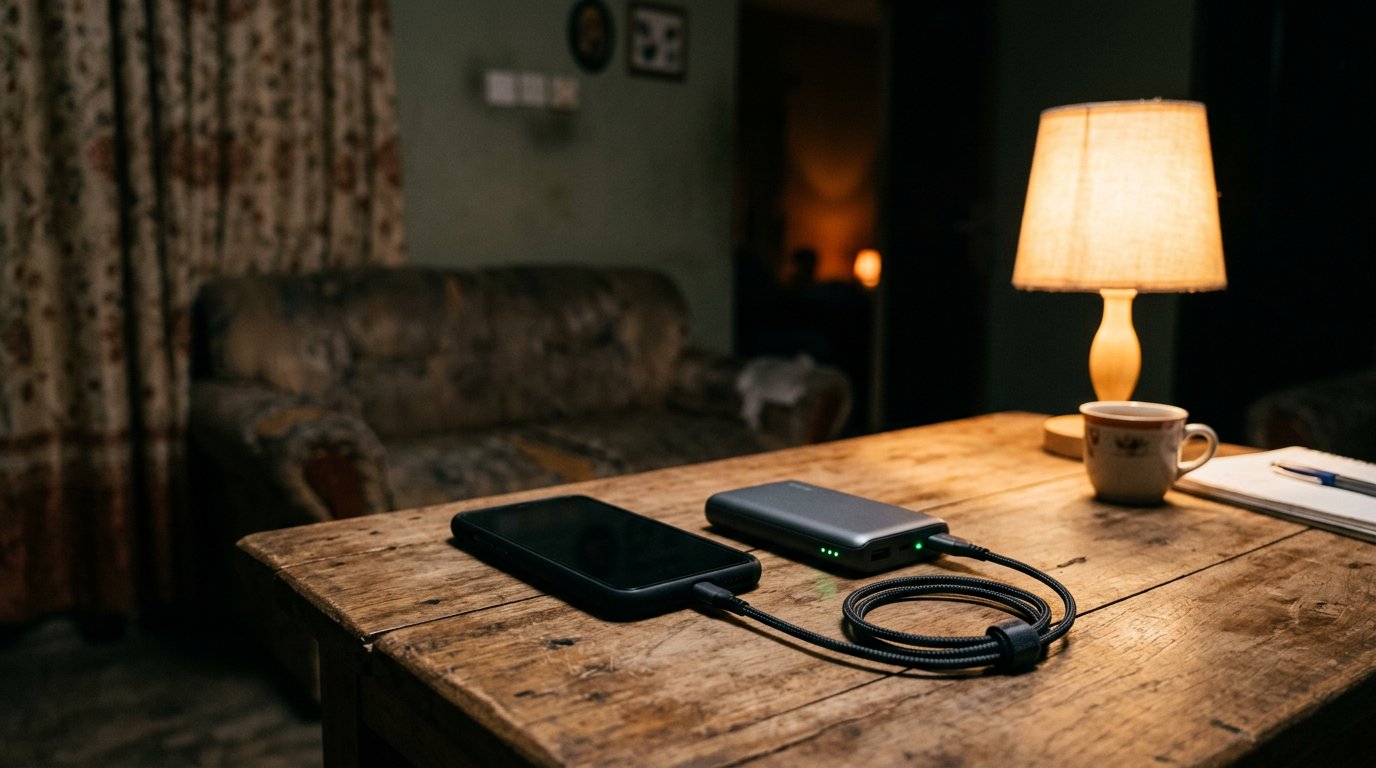
The grid has moods; your machines have limits. Choosing a power bank that tells the truth, charging on hard ground, and the seconds after the light returns that decide a device's life.
The light went at seven and the house exhaled — spoons paused, conversations leaned closer, and in the corner the phone kept working because a small brick in its cable was paying its way. The power bank is the true national companion of this era: it attends weddings, classrooms, markets and hospital corridors, and it asks so little that most people never learn anything about it. This lesson is the learning, because the little brick can serve you faithfully for years or misbehave expensively, and the difference is a few boring facts.
Choosing one, honestly. Capacity is printed in milliamp-hours, and the honest arithmetic is roughly this: a ten-thousand bank refills a normal phone about two times, a twenty-thousand about four — everything promising to change those numbers with a flashlight function is lying on the box. The honest brands cost a little more and weigh what they claim; the suspicious ones weigh like air and promise like lottery. Read the printed output too: two ampere charges a phone at a decent pace, one ampere charges it overnight and then some. And the cable counts — the fine cable that came free with a charger is often the reason a bank seems weak. Then the habits, and the first is the one that saves houses: a swollen power bank — the case bulging like a well-fed rat — is finished, whatever the age, whatever the price. It does not get kept in a drawer for emergencies. It gets retired, taken to a repair shop or collection point, and replaced. A swollen battery is a small fire sleeping in your bag, and the bag rides in the sun all day.
Hard ground, and the seconds after the light
Charging lives by two placements. The power bank charges itself on a hard surface — table, stool, the floor of the parlour — never under a pillow, never inside a bag while it works, never under the mattress where somebody read that phones charge faster. Batteries breathe heat while they charge, and the phone's own warning about charging on soft beds in lesson forty-one applies to the brick twice over. And the phone charges from the bank away from fuel, candles and the cooking gas — the combination is rarer than you think and exactly as expensive as you fear. Then the surge, which is the part of the lesson that decides the life of the computer: the moment the light returns, the wires carry a first breath of power that is often dirty and sometimes fierce, and the machines that were plugged in during the outage eat that breath first. So the house rule: when the light goes, unplug the valuable things — the computer, the television, the metered fridge if you can reach it — and plug them back a minute after the light settles, fans first, valuables after. A surge strip for the computer desk costs little and absorbs the ordinary bites; it is the umbrella of this road, and like umbrellas it only helps if it was arranged before the rain.
The generator changeover deserves its sentence: the machines of the desk — the computer, the router — are either off during the changeover or sitting behind the small UPS from the remote-work lesson, which carries them across the gap without a stammer. And the phones: they forgive surges better than computers, but they do not forgive the market's charging kiosk as much as the queue assumes — a shared charging cable is a shared road, and lesson forty-three's rule about other people's computers applies, gently, to other people's plugs. Charge at home where the house knows your habits, use the kiosk for minutes in true need, and keep the little brick on your side of the bargain: charged on hard ground, retired when it swells, believed when it warms but never when it bulges.


- Buy the honest capacity — two refills per ten thousand — from a brand that weighs something. Read the box like a price, not a poem.
- A swollen bank retires today, whatever it cost. It rides in the bag with your documents; think about that.
- Charging on hard ground, always. Under the pillow is where charging stories stop being funny.
- Light off, valuables unplugged; light back, one minute, then fans first and the computer after. The surge eats the impatient.
The grid and the guest
The grid will keep its moods, and the machines will keep their appetites; the household that prospers between the two is the one that arranged its bricks, its strips and its one-minute rule in a quiet week. Power, like money and data, obeys the oldest law of this shelf: what is arranged in daylight does not panic at night. The next lesson takes the same arranging instinct to the wall box in the corridor that beeps when it is hungry — the prepaid meter, and the tokens that feed it.