Computer skills from scratch·Writing on the page·Lesson 69 of 180
Cc, Bcc, and Reply all
 Ellis Dennis GrahamFounder, Cyber Elias Academy 2026-07-03 3 min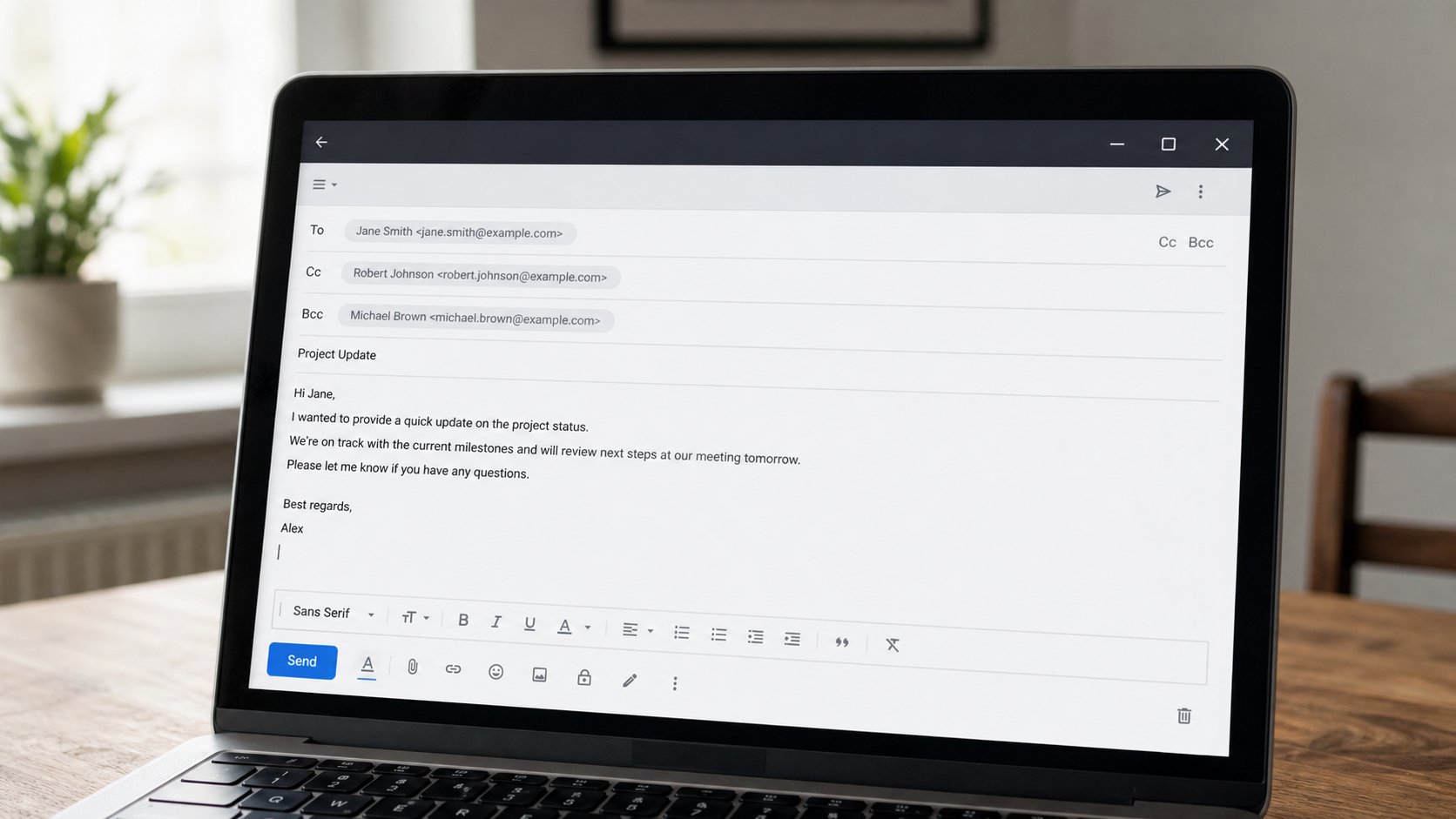
To is the person who must act. Cc is the person who should see. Bcc is a copy they did not all see each other get. Reply all is a loud room. Use it rarely.
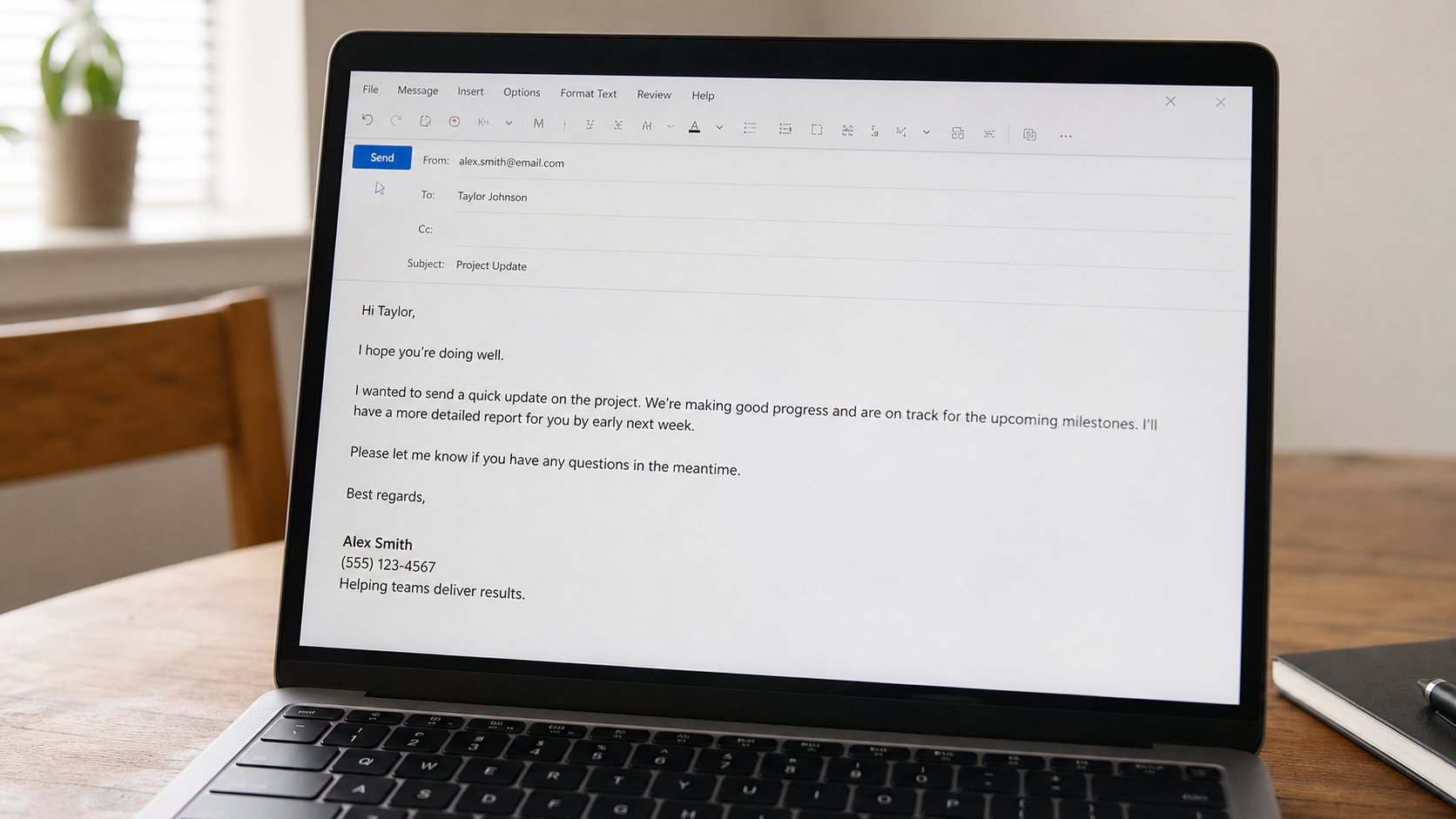
You already send To, Subject, body. Two extra fields sit on the envelope, often hidden behind a small Cc. Cc means carbon copy — a name from the age of paper: this person should see the letter, but it is not their job to answer. Bcc means blind carbon copy: they get it, and the others do not see their address. Reply all sends your answer to everyone who was on the original. This lesson is who belongs in which field, and the moment Reply all turns a school thread into a market.
To: the person who must do something — accounts, the landlord, Mrs Amadi. One address, or two if they share the job. Cc: your own second address if you want a copy; a supervisor who asked to be kept in the picture; a parent on a school mail if the school said so. Not a whole class. Not a group of cousins “for awareness.” Extra eyes are not free. They cost the other person a minute, and they cost you a wider room if you later need to speak plainly.
Bcc, and the list you should not expose
If you must mail twenty parents, or twenty members, put your own address in To, and the twenty in Bcc. Each person receives one letter. They do not receive each other's addresses. Putting twenty people in To or Cc is how a family WhatsApp is born inside email, and how a stranger harvests numbers. Bcc is manners for a list. It is not a place to hide a boss so you can pretend they were not told. If the To person should know the boss was copied, use Cc.
Reply is to the sender. Reply all is to the sender and every Cc, and sometimes a list you cannot see. Before you press it, look at the To line of your reply. If there are fifteen names, ask whether fourteen of them need “thank you.” Usually they do not. A thread about a timetable that becomes twenty “noted” mails is how people mute the school. Reply to the sender, or to the one person you must correct.

- Open Compose. Show Cc and Bcc if they are hidden — a small link next to To.
- Send yourself a practice: To your address, Bcc a second address you own if you have one. Confirm both arrive, and that To does not list the Bcc.
- Find an old group mail. Look at Reply versus Reply all. Do not send. Only look at who would receive it.
- Never Bcc a person on a quarrel so they can “see who you are.” That is theatre. Leave them out, or use Cc honestly.
Forward, and the chain
Forward sends the letter on. The chain below may hold old addresses and an argument. Read the chain before you forward to a new person. Cut what they do not need, or copy the one fact into a new mail. “Please find below” with six weeks of Reply all is not a briefing. It is a pile.
You now have four doors: To, Cc, Bcc, Reply all. Most letters use only To. That is not unsophisticated. That is a letter with one job. Extra fields are for extra jobs. If you cannot name the job, close the field. The envelope should be as quiet as the body.