Computer skills from scratch·The pocket and the purse·Lesson 161 of 180
Banking without the internet
 Ellis Dennis GrahamFounder, Cyber Elias Academy 2026-08-21 4 min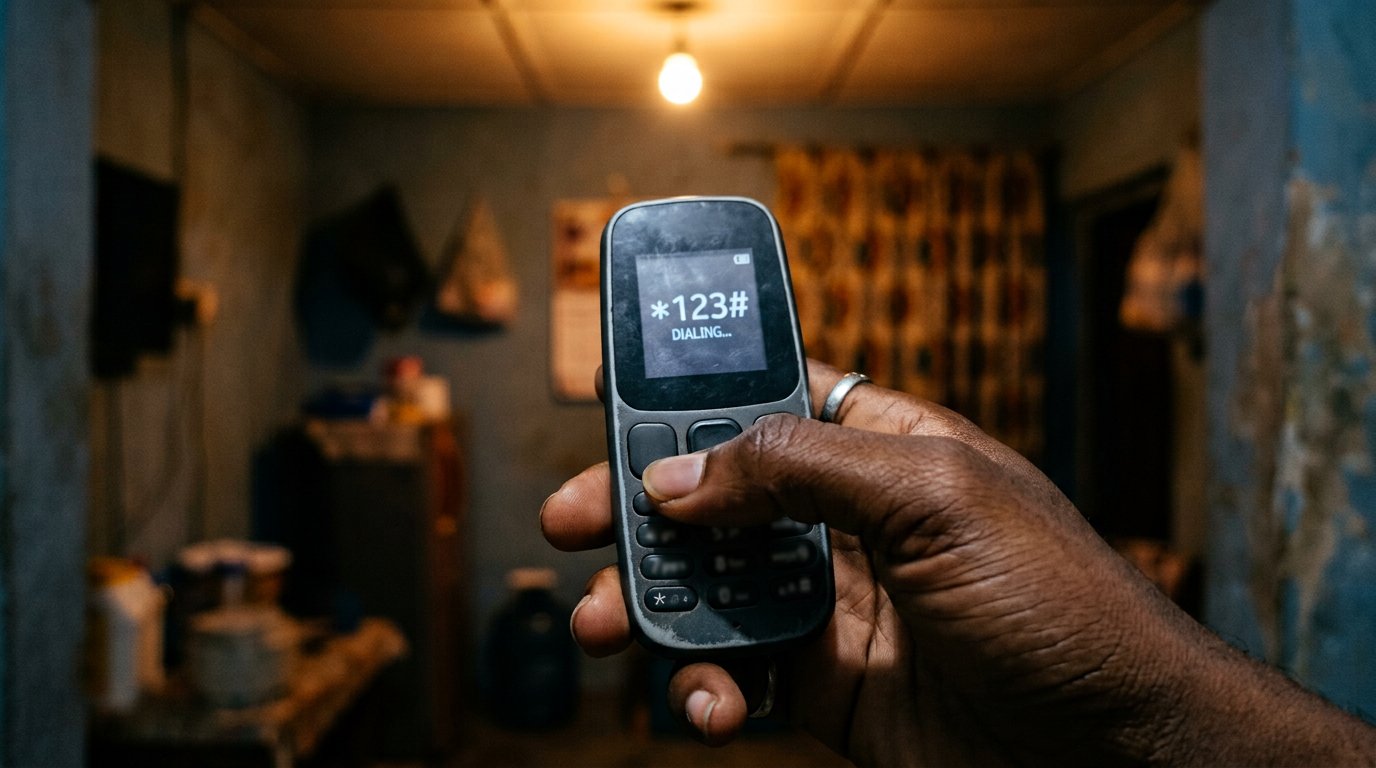
Data dead, network alive: the short codes that move money on any phone in Nigeria, the fake codes that collect instead, and the pocket habits that keep the two apart.
The data finished on the twelfth of the month, as it always does, and the school fees refused to wait for the next bundle. Then the trader beside you — the one with the small phone with the torch that barely works — dialed five symbols and moved the money anyway. That is USSD: the bank's short code, spoken over the call network instead of the internet. It works on every phone ever sold in this country, it works when the data is dead, when the smartphone is charging in another room, when the generator is off and the network bar is one thin line. Every Nigerian who moves money should hold this key, and hold it correctly, because the same door that carries your money has been copied by collectors.
The shape of it, once, slowly. You dial the bank's short code — it begins with the star key and ends with the hash, the way a sentence begins and ends. The network answers with a menu: transfer, balance, airtime, bill. You choose, you type the account number, the app shows you the name — read the name, the bank-lesson's law, unchanged at this altitude — you type your PIN, and the confirmation lands as a text message with a reference. The session lives for less than a minute and dies when the screen says so. No data was spent. No app was opened. The whole transaction breathed on the call network your SIM already had. And that is why it saves the month on the twelfth, and why the school fees did not wait for the bundle.

The code belongs to the bank, and the bank alone
Now the warning, and it is not a small one. Codes travel as forwards. Somebody sends you the code for a bank on a broadcast list; a poster at the kiosk prints one; a helpful comment under a market video lists them all. The fraudsters know this, and they print too — a code one digit away from the bank's real one, with a menu that looks identical and a collector sitting where the bank should be. The rule that keeps you safe is the one you already keep for portals: the code comes from the bank itself — its own website, the card in your wallet, the line printed on your ATM receipt — never from a forward, never from a poster, never from a comment. Save your bank's real code in the phone once, from the source, and never dial another for that bank again. The forwards lesson's law, sharpened for money: a code you cannot trace is a code you cannot dial.
Two pocket manners complete the craft. First, the PIN: it is typed on the keypad, into the menu your bank's code raised — never given to a caller, never given to the helpful man at the market who offers to do the transfer for you while you hold the parcel. If a stranger must help with the dialing, let them dial and then hand them away from the PIN; better still, do what the trader does and learn the four keys yourself, one evening, on a small transfer of fifty naira to yourself. Second, the dual-SIM housekeeping: know which line the bank knows — the SIM that receives the alerts — and keep that SIM alive, charged, registered. The alerts are the receipts of this road. A bank whose alert line is dead is a bank whose money whispers.

- Get your bank's real short code from the bank itself — website, card, or receipt — and save it. Never dial a forwarded code.
- Practise once with fifty naira to your own account: menu, name, PIN, confirmation. The road, walked in daylight.
- The PIN is typed by your own thumb only — not spoken, not handed to a market helper.
- Know which SIM receives the bank alerts and keep it alive. No alerts, no receipts, no peace.
The network that never finishes
Data bundles expire and promotions end, but the call network is the last light on in every storm — it carried the OTPs of lesson ninety-eight and now it carries the market's money. The trader with the small phone was never behind the times. She was ahead of them: she keeps one road that does not depend on bundles, on apps, on the grid. Learn her road, keep its laws, and the twelfth of the month becomes just another date the money crossed.