Computer skills from scratch·Standing taller·Lesson 154 of 180
The interview on a screen
 Ellis Dennis GrahamFounder, Cyber Elias Academy 2026-08-24 4 min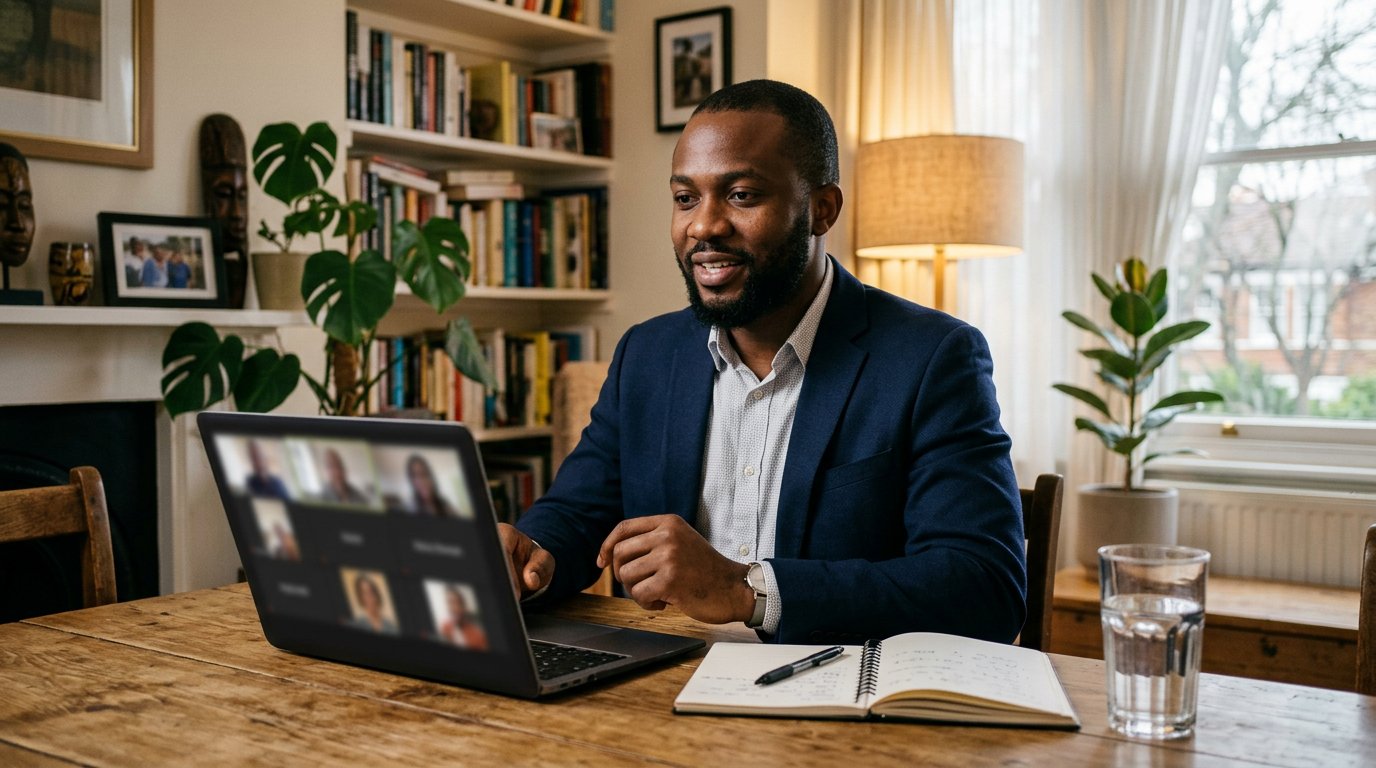
The online interview is won before it begins: the test run, the window behind you, the camera at eye level, and the manners of a guest in somebody's parlour.
The interview used to begin when you walked through the office door. Now it begins on a screen — the hiring manager in Lagos, the panel in London, you in your bedroom with a data plan and a chance. The good news: the screen is a room you fully control, and the candidate who prepares the room as carefully as the answers is already ahead of most. This lesson is the preparation, in the order it should happen.
The day before: the test run. Install or update the app the panel named — the meeting link says which — and make one test call to a friend: camera working, microphone working, headphones with a mic better again. Charge the laptop fully and keep the charger plugged in for the call; put the phone on silent in another room, and set a backup tap — the hotspot lesson — in case the Wi-Fi chooses the hour to misbehave. Then stage the room. Light from a window facing you, never behind you — a bright window turns you into a silhouette with opinions. The camera at eye level on a stand of books, so you are not looming down like a judge or grovelling up like a suspect. Behind you: a plain wall or a tidy shelf — the panel will see it and judge it, because humans cannot help themselves.
The hour, and the manners
Tell the house. A Nigerian interview call dies more often to a gate crash, a blender, or an unexpected visitor than to any technology — brief everybody whose noise can reach you, and put the generator on quiet standby if the grid is in one of its moods. Dress fully — yes, including what the camera cannot see; the stand-up-for-the-document surprise has ended careers at the two-minute mark. Join five minutes early, camera on, sitting already: the panel's first sight of you should be ready, not rising. Keep your CV open on the screen beside the call, your questions written in the notebook, a glass of water within reach.
Then the old manners, on a new road. Look at the camera when you answer — the small dark dot above the screen — not at your own magnificent face; eye contact has simply moved address. Speak a touch slower than feels natural; networks eat consonants. When the connection stutters, stop, wait, ask did that land? — it reads as competence, not weakness. Answer in the letter's spirit: short, ordered, honest — one point at a time, the way lesson one hundred and fifty-six's emails will be written. And when it ends, thank them by name, leave the call before celebrating, and send the thank-you note the same day. The screen interview is still a visit: you are the guest, the panel is the parlour, and the oldest courtesy is the newest bandwidth.
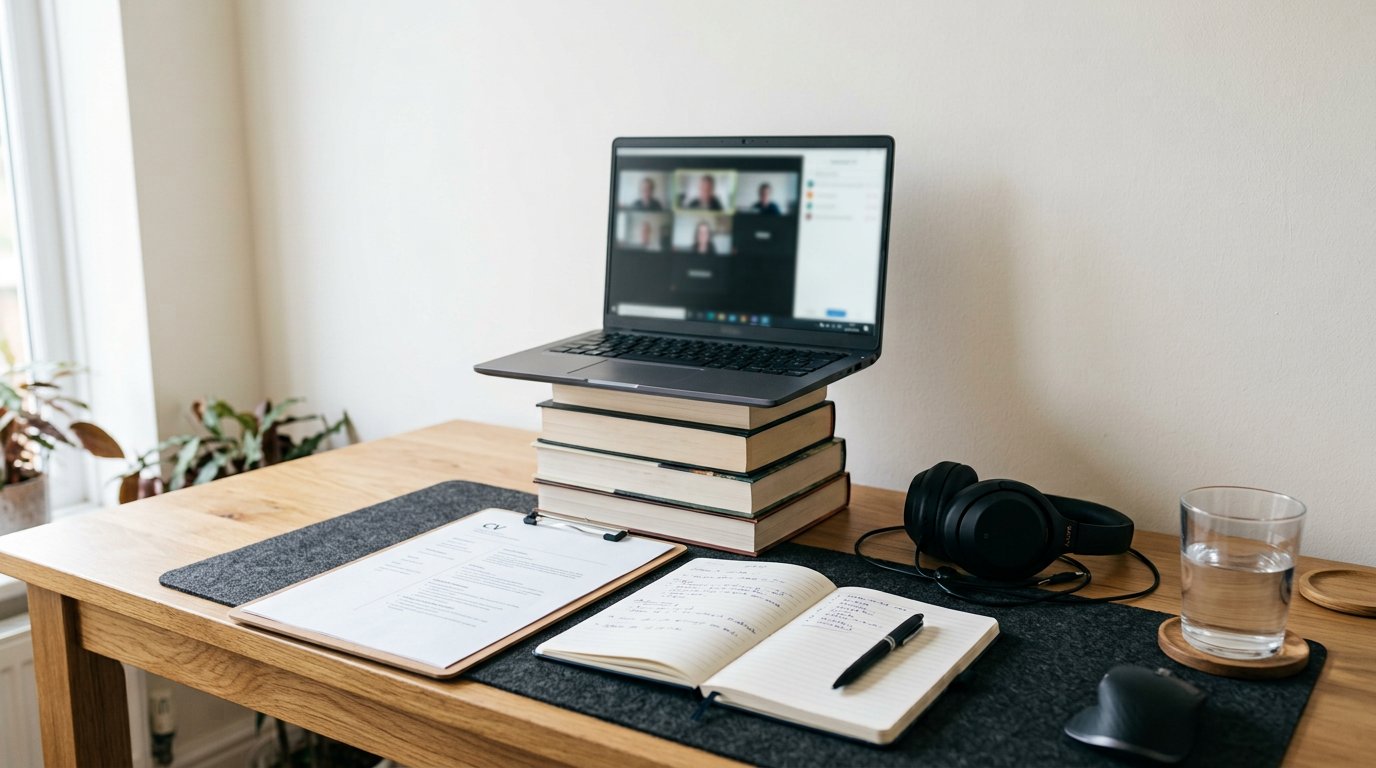
- Test call the day before: camera, microphone, headphones, backup hotspot. Two minutes of testing buys an hour of calm.
- Window in front of you, camera at eye level, wall plain behind you. Set it tonight, not at five minutes to the call.
- Brief the house and silence the phone in another room. The blender has ended more interviews than the network.
- Camera, not mirror: look at the dot when you answer. Then the same-day thank-you message.
The room you control
The office candidate competes in a room the employer built. You compete in a room you built — its light, its sound, its calm. That is not a disadvantage; it is a rehearsal. Every habit this lesson installs — the test run, the staged room, the briefed house, the early arrival — is the same discipline the remote lesson asked of the paid professional. Practise it at the interview, and you arrive at the job already fluent in its daily grammar.