Computer skills from scratch·Standing taller·Lesson 153 of 180
The CV that gets read
 Ellis Dennis GrahamFounder, Cyber Elias Academy 2026-08-19 4 min
Most CVs die inside a machine before a human ever sees them. The plain format that survives the robot parser, the honest keywords that match the advert, and the one page that opens doors.
The one-page honest CV of lesson seventy-five got its facts straight. This lesson gets it read — because between your CV and the employer's eyes now stands a machine. Big companies and job portals feed every CV into software that scans it for skills, ranks it, and shows a human only the top of the pile. The software — people call it an ATS, an applicant tracking system — is not clever. That is the tragedy and the opportunity: it rewards the plain, the ordered and the matching, and it quietly kills the beautiful, the creative and the strange.
So the format that survives is boring, and boring is the strategy. One column, no text boxes, no tables, no photographs in odd corners — all of those scramble a parser the way a wrong file extension scrambles the open-with lesson. Standard headings the software recognises: Summary, Work Experience, Education, Skills, in that order. Dates beside every role in one honest pattern. A plain font, generous spacing, one page for the first decade of your life. Save as PDF, named firstname-lastname-cv, and your contact details as ordinary text — an email address and a phone number the machine can copy, not a designer's graphic the machine cannot read.
The keywords, honestly carried
The scanner matches words, and the words it is matching are sitting in the advert. If the advert says customer service, the CV says customer service — not people management, not client relations, however truer your phrase may be. Read the advert twice, list its plain skill words, and carry the ones you truthfully own into your Skills and Experience lines, in the advert's own language. This is not deception; it is translation. The lie — claiming a skill you cannot demonstrate in the room — is the old tells again, and the interview is where it dies. But the honest absence — owning the skill and naming it in a word the scanner never sees — dies earlier, silently, unseen by any human who might have loved your experience.
Then the tailoring, which is where the two-sentences lesson grows into a method: for each serious application, adjust the summary line and reorder the experience so the most relevant role reads first — fifteen minutes with the advert open on the phone beside the keyboard. Sprayed CVs read like sprays; tailored ones read like answers. The upload lesson then carries it through the portal door: right size, the bar finished, the tick screenshotted. The CV that gets read was never the prettiest. It was the one a machine could parse, a scanner could match, and a tired human could trust in ten seconds. Boring, matched, true — the three secrets of the paper that opens the room.
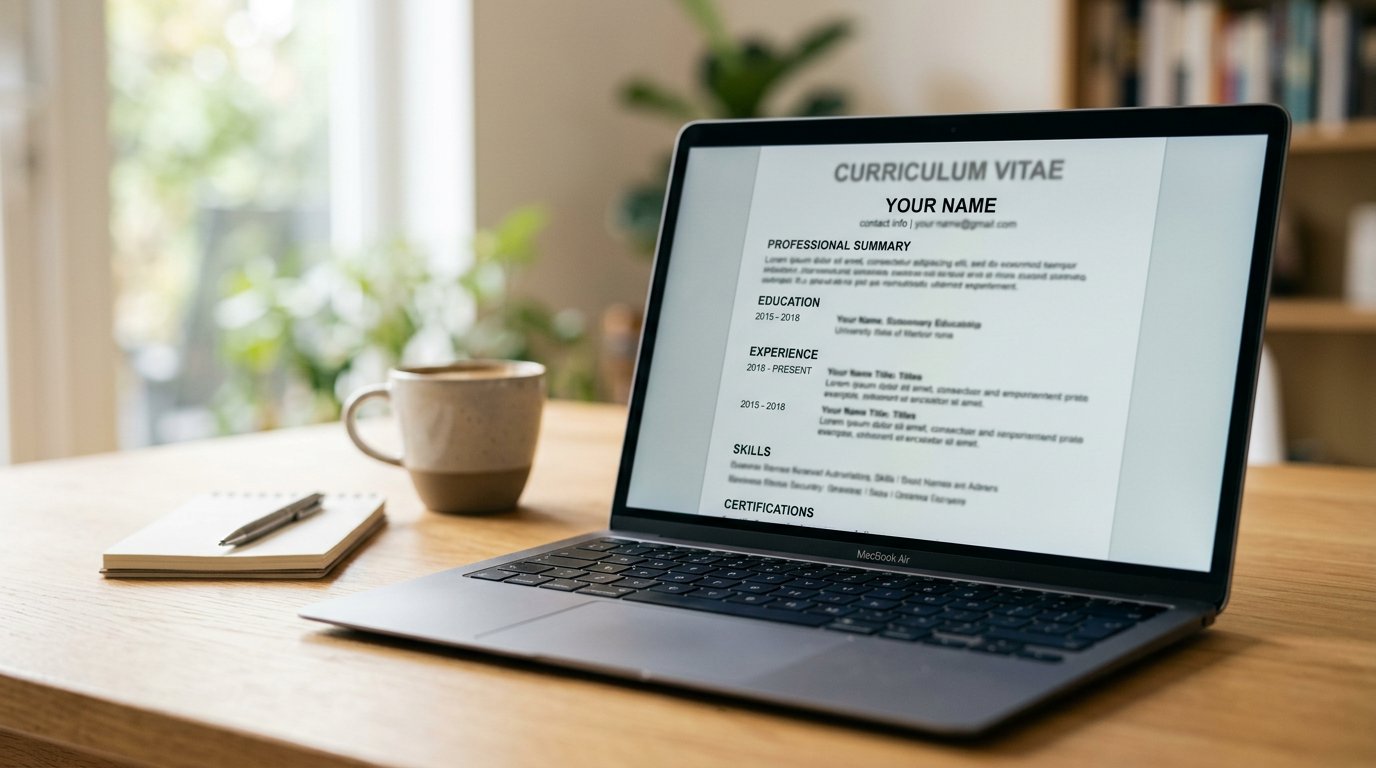
- Rebuild your CV in one column with standard headings. Test it: can you copy the text out of the PDF cleanly? Then the machine can too.
- For your next application: read the advert twice, list its skill words, carry your true ones in. Translation, not decoration.
- Tailor the top third per application — summary first, most relevant role first. Fifteen minutes, per door, every time.
- Ask a friend to read your CV for ten seconds and say what you do. If they cannot, neither can the scanner.
After the robot, the human
Everything the scanner does, it does to decide whose ten seconds of human attention you get. Win them, and the old laws resume: honesty in the room, proof in the portfolio, the manner of the guest. The machine is not your enemy. It is the first gateman of lesson one hundred and twenty-four — dull, fair, and completely readable, now that somebody has finally introduced you.