Computer skills from scratch·Standing taller·Lesson 157 of 180
Notes that last
 Ellis Dennis GrahamFounder, Cyber Elias Academy 2026-09-06 4 min
You will not remember Friday in March, so Friday must write to March. One home for every note, named and dated, reviewed weekly — the quiet system that turns busy weeks into a memory.
Here is a painful test: what did you agree on last Tuesday's call? Who told you the fee changed, and when? Most people cannot say, not because the memory is weak but because nothing was ever written where March could find it. The working life runs on notes — decisions, names, prices, promises — and the difference between people who seem organised and people who actually are, is not talent. It is one home, one habit, and ten minutes a week.
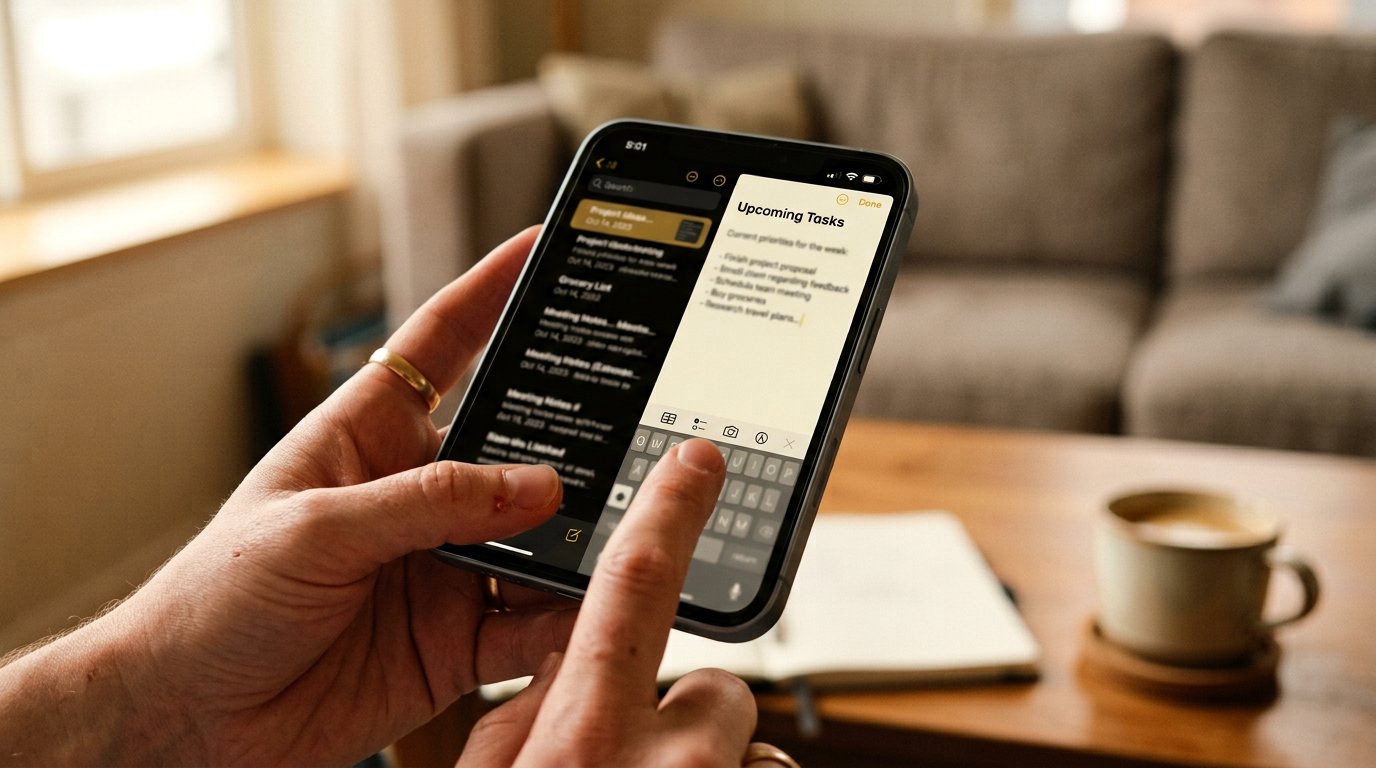
One home. Not seven. Choose a single place where every note lives — a notes app on the phone and computer that syncs, or one good notebook always in the same bag pocket — and let it become boring with use. The scattered system is the failed system: the meeting note in the phone, the price on a card, the promise in a chat that has since sunk. Whatever you choose, the rules of the house are the ones you already keep elsewhere: every note gets a date and a title — 14 June, Chidi — generator quote — so the search box of the Ctrl+F lesson finds it in a blink next March. Capture fast, file weekly: in the meeting, thumb flying, spelling be damned; on Friday, ten minutes to tidy, tag and throw out the notes that seemed urgent and turned out to be noise.
What to write, and the weekly review
Meeting notes have kept a four-line discipline for a century, and it survives every app: the date and the people; what was decided; who carries what, with a date; and what nobody agreed but somebody thinks happened. Write decisions in the room, and where you can, read them back aloud before the meeting ends — may I confirm, we agreed Friday for the delivery and Nana pays the courier — the sentence that has saved more working friendships than any contract. Personal notes follow the same bones: what happened, what it means, what I will do. And the photograph saves the paper world: a notebook page shot into Drive, the papers lesson's backup applied to your own handwriting, survives the bag, the rain and the taxi seat.
The weekly review is where notes become a memory instead of a landfill. Friday, ten minutes: read the week's notes top to bottom, carry the unfinished whos and whens into next week's page, check every promise against the calendar, and — the part nobody regrets — search something old. Watch the search box find, in three seconds, the phone number you wrote in February and thought you would remember. That small miracle, repeated weekly, is the whole system paying rent. You will not remember Friday in March. Friday wrote to March, in a house March knows how to search. That is what organised people actually do, and from this week, so do you.
- Choose the one home today — app or notebook — and move tomorrow's notes there. Boring and faithful beats clever and abandoned.
- Date and title every note, always. Future-you searches titles, not vibes.
- Book the Friday ten minutes: tidy the week, carry the open whos and whens, search something old.
- Meetings: date, people, decided, who carries what by when — read back aloud before the room breaks up.
The memory you are building
A year of this system leaves you with something nobody can take to the cleaners: a searchable record of your own working life — every decision, every price, every promise and its date. It makes you the person who says as I wrote on the 14th instead of I think; it settles arguments before they start; and it compounds, quietly, into the professional's greatest advantage — knowing what actually happened. The books of lesson one hundred and forty-three keep the money honest. This keeps the weeks honest. Same discipline, smaller notebook.