Computer skills from scratch·Where this leads·Lesson 123 of 180
SIEM, in ordinary words
 Ellis Dennis GrahamFounder, Cyber Elias Academy 2026-04-09 3 min
SIEM — said like seam — is the ledger that collects what every machine saw, and shouts when the pieces make a pattern. The tool at the heart of every watching room, demystified.
SIEM stands for Security Information and Event Management, and is said like seam. Behind the press of consonants is a humble idea: one giant ledger. Every computer, door system, bank app and office machine keeps a record of what happens on it — the log, a line of who did what, when, from where. A SIEM is the room where all those records from all those machines are gathered into one place, laid side by side by time, and watched by rules. Nothing more exotic than that: a notebook that reads every other notebook.
Why one ledger? Because a thief's footfalls rarely land in a single notebook. The failed password sits in one log, the unusual login in another, the strange file copy in a third — each innocent alone, each a sentence of a story when laid side by side. Alone, no machine shouts. Together, the pattern is loud. The SIEM's whole craft is correlation: rules that say, if these three quiet things happen within one hour, that is not quiet any more — raise it. What it raises is the alert, and the alert is the queue the analyst eats from. The tool most connected to it: the names you will meet in adverts are Splunk, Microsoft Sentinel, QRadar, Wazuh — different pens for the same ledger.
What feeding the ledger actually looks like
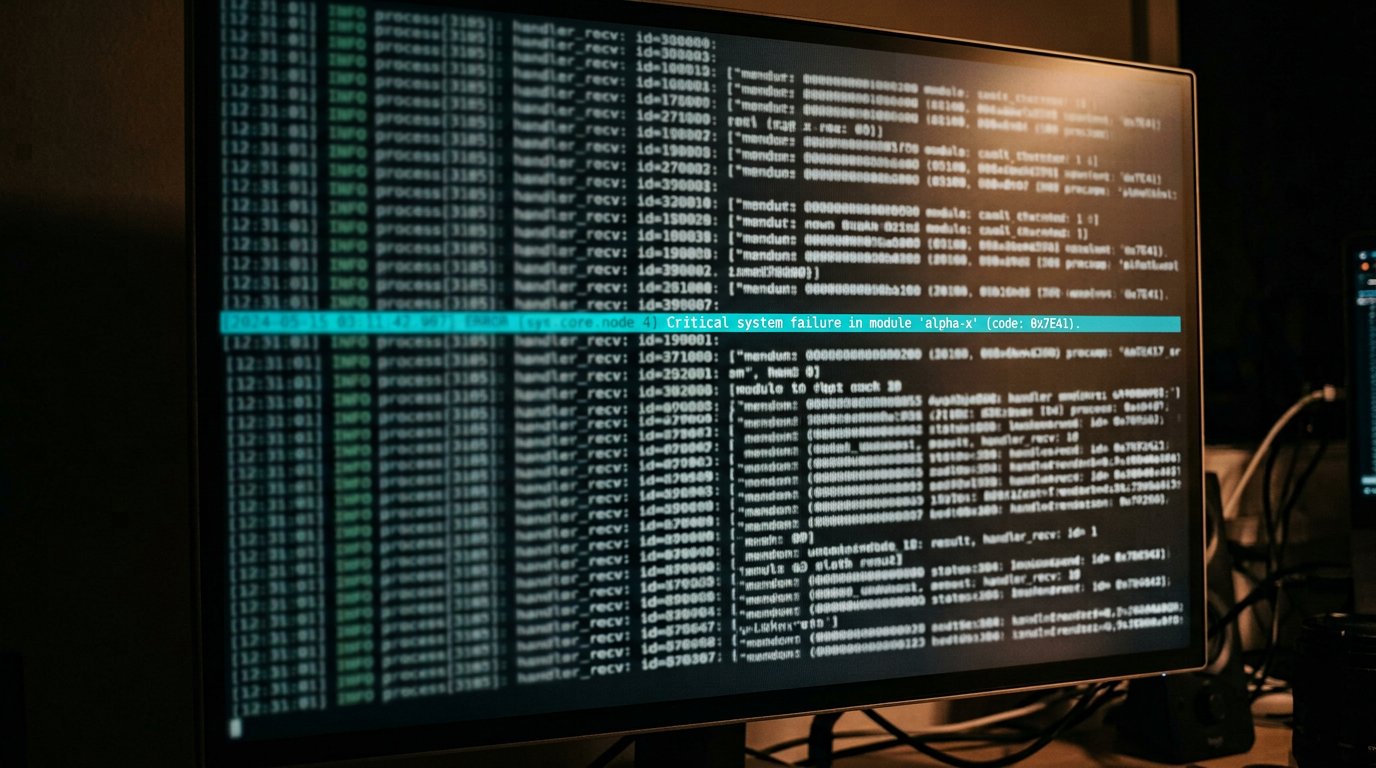
Log lines are boring on purpose — that is their honesty. A typical one says: this user, from this address, at this second, tried this door, and it failed. A thousand machines write such lines every second, and the SIEM drinks them without blinking. The analyst's skill against this flood is search: asking the ledger, in its own query language, show me every login for this user today; show me everything that talked to this address this week. It is less programming than good questioning — the Ctrl and F lesson grown into a profession. If you can form a precise question, the ledger answers in seconds with the truth of a hundred rooms.
And the ledger needs tending, which is a career in itself. Rules that raise everything bury the room in noise, and a tired room misses the real shout — so somebody tunes: closes the rules that cry wolf, sharpens the ones that matter. Somebody wires new machines into the ledger, because a room whose logs never arrived is a room watched by memory alone. And somebody checks the ledger itself is sealed — a thief who can edit the notebook owns the story it tells. Feeding, tuning, sealing: the three honest jobs around one giant notebook.
- Say it until it is yours: SIEM, like seam — the giant ledger that correlates and raises.
- Understand the chain by heart: logs from machines, rules in the ledger, alerts in the queue, analyst at the desk.
- Play with any free log-search tool for one evening. Form three precise questions and watch the ledger answer.
- Remember the weakness that matters: a ledger whose sources are missing or editable protects nobody.
Why this word follows you
Because every watching room on earth stands on one. Job adverts for analysts assume you have stood beside a SIEM; interviews ask how you would hunt in one. But the idea, as you now hold it, is a village idea: every compound keeps records; one trusted house collects them each evening; when a pattern crosses compounds, the crier raises it, and the watchers decide. You have just understood what universities wrap in an acronym. The next lesson is the philosophy the whole room increasingly watches by — and it begins at a gate.