Computer skills from scratch·Where this leads·Lesson 124 of 180
Zero trust: the gate that trusts nobody
 Ellis Dennis GrahamFounder, Cyber Elias Academy 2026-04-14 3 min
What is zero trust security? The old walls trusted whoever was inside. Zero trust trusts nobody — every knock, every time, identity and device both checked. You already carry its front door in your pocket.
What is zero trust security? Strip the phrase of marketing and it is one sentence: never trust, always verify. A security way of building — and running — an organisation on the belief that nobody is trusted by where they sit, only by what they can prove, every time they knock. Not once at the gate in the morning. Every door, every hour, every request. The phrase arrived from the industry's own confession: the old way assumed the thief was outside the walls, and the thief kept getting in and walking the corridors freely, because inside was trusted.
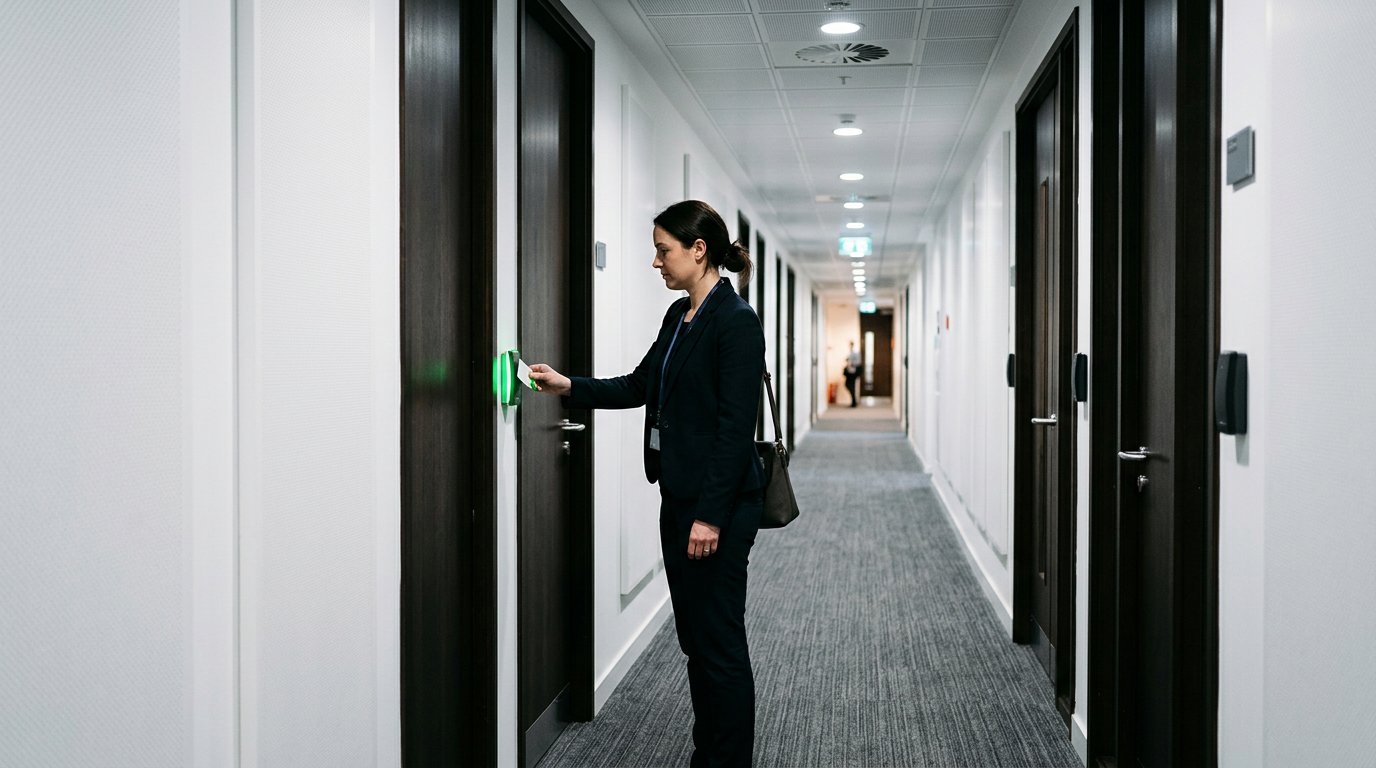
Picture the two arrangements. The old compound: one strong gate, and inside it every inner door open to anyone wearing a staff lanyard — because the gate already checked them, did it not? One cloned lanyard, and a visitor owns the corridors. The zero-trust compound: the same strong gate, and then every inner door checks again — who are you, prove it; what device is this, is it the one we issued, is it healthy; and even then, this door opens only as far as your work requires, not one room further. The guest with the right lanyard is still checked at accounting's door, and accounting's door does not open into the vault. Nobody is trusted for where they are. Everybody is verified for what they prove.
The pieces, named plainly
Three habits hold it up. Strong identity: every person and every machine has a provable self — and the second lock, the one on your Google account, is zero trust's smallest citizen; multi-factor verification is its signature move. Least privilege: each person holds exactly the keys their work needs, no more — the gateman does not carry the cashier's keys, and the accountant cannot open the server room. And small rooms: the organisation is divided so that a thief in one room does not inherit the building — the corridor that once connected everything is replaced by checked doors. The industry formalised this in documents like NIST SP 800-207, but you have just held the whole idea; the documents only add the plumbing.
You have met the philosophy already, wearing everyday clothes. The bank app that asks for the code even after the password: zero trust. The laptop that re-verifies before opening payroll: zero trust. The second lock you put on your own account at lesson one hundred and eight — you ran a zero-trust policy on your own life before most companies did. The stakes scale; the sentence does not. Trust is never granted by location or history. It is earned by proof, freshly, at every door.
- Say the sentence until it is yours: never trust, always verify — every user, every device, every request.
- Audit your own compound tonight: which accounts hold more keys than their work needs? Least privilege begins at home.
- Your second lock is your first zero trust. Notice every re-verification this week with new respect.
- In interviews, the question what is zero trust is answered in one sentence and three habits: identity, least privilege, small rooms.
Why the whole industry turned
Because the walls stopped meaning anything. Staff work from cafés and sitting rooms now; the company's jewels sit in rented buildings run by other companies; and the thief stopped pickpocketing lanyards and started logging in. When the perimeter dissolved, the only honest place to draw the line was around each request: prove, every time. That is why the phrase follows every security job advert now, and why the watching rooms of the last lessons are rebuilding their rules around it. The gate keeper's oldest wisdom, promoted to architecture: trust the person, not the lanyard — and check the person, freshly, every time.