Computer skills from scratch·The wider street·Lesson 116 of 180
Learning online, mostly free
 Ellis Dennis GrahamFounder, Cyber Elias Academy 2026-03-08 3 min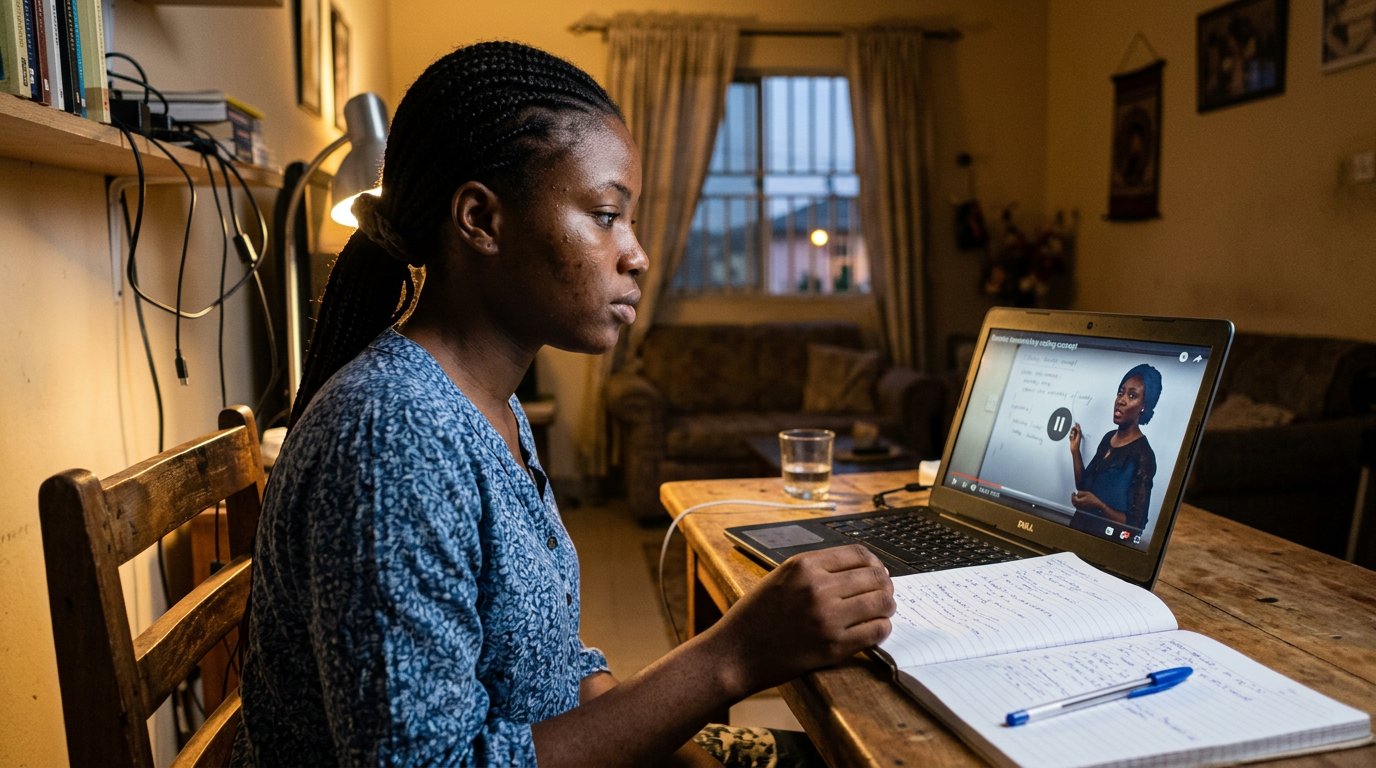
The classroom in your pocket, mostly free: search like a student, use pause and captions, finish one thing with your hands, and close the gap between watching and doing.
Here is the open secret of this century: the classroom is already in your pocket, and most of it asks for nothing but attention and data. YouTube alone holds more teaching than any of us could sit through in a lifetime — tailoring, plumbing, Excel, the camera, the drum, the camera drone. The skill is no longer access. The skill is learning without drowning, because the flood is real: a thousand teachers, all talking, all at once.
Search like a student, not a browser. Not a vague word — a subject and a level: Excel for beginners, how to sew a bodice, Photoshop for a small business. Then use the video lesson's three gifts, pause, captions, and speed, as study tools: pause where your hands should catch up, captions when the accent is new to you, speed up the parts you already own. Playlists are courses that strangers have already arranged for you, beginning to end — the shelf built, the books ordered. Sit in one for a month and you will come out different.
Choosing, finishing, practising
The flood's real danger is collecting. Fifteen courses bookmarked, four apps installed, none finished — a gallery of beginnings. The cure is one subject for one month, written on paper where you sleep. And practise with your hands: the machine open beside the video, the tutorial followed step by step, the mistake made and undone — you own undo now. A video watched is a video watched. A thing practised is a skill. The gap between those two sentences is where most learners are lost, and you have crossed that gap before, on a keyboard, one honest hour at a time.
Certificates: real free courses exist, and a certificate with real learning behind it opens a door or two. But an employer trusts the thing you can do in front of them more than the paper that says you once watched. So finish, then make the smallest real thing with what you learned — a poster for a shop, a spreadsheet for a church, a page for a friend's trade. And when you want a person in the room, machines to sit at, somebody to ask — that is what the academy's classes are for. These notes are the free version of the same belief: this knowledge belongs to whoever wants it.
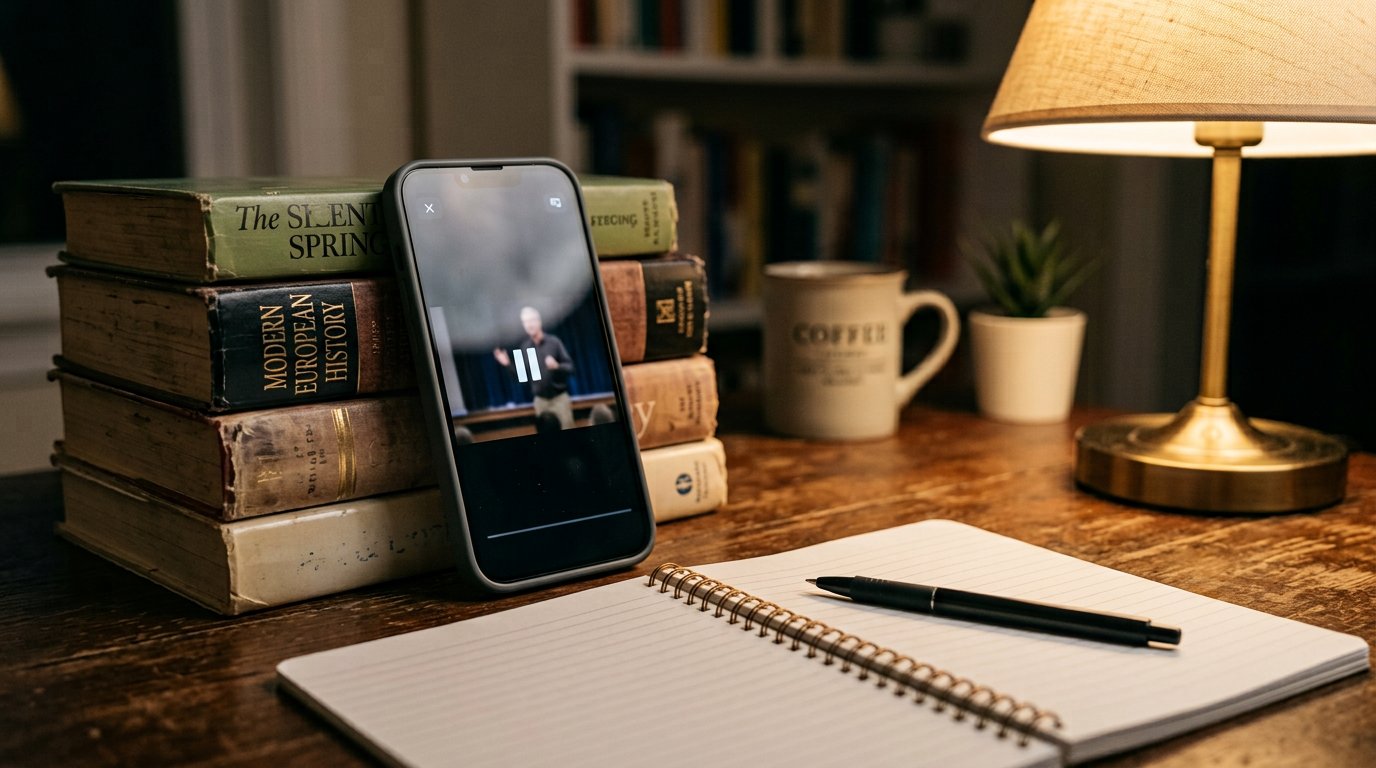
- Choose one subject for one month. Write it on paper where you sleep.
- Learn with your hands: machine open, pause and repeat, mistake and undo.
- Download what you can on Wi-Fi, at the café, before the week the data cannot carry.
- When the month ends, build the smallest real thing with it, and let it live where others can see it.
Respect the gift
A grandmother here could not have bought this shelf for any money, at any age in history, and it now sits beside her, free, in her language, mostly. The honour you pay a gift like that is to use it: close the app sometimes and do the thing with your own hands, badly at first, the way every hand in these notes was trained. Watching is the beginning. Doing is the lesson. The rest is the pause button, pressed as often as needed.