Computer skills from scratch·The wider street·Lesson 120 of 180
Each one, teach one
 Ellis Dennis GrahamFounder, Cyber Elias Academy 2026-03-26 3 min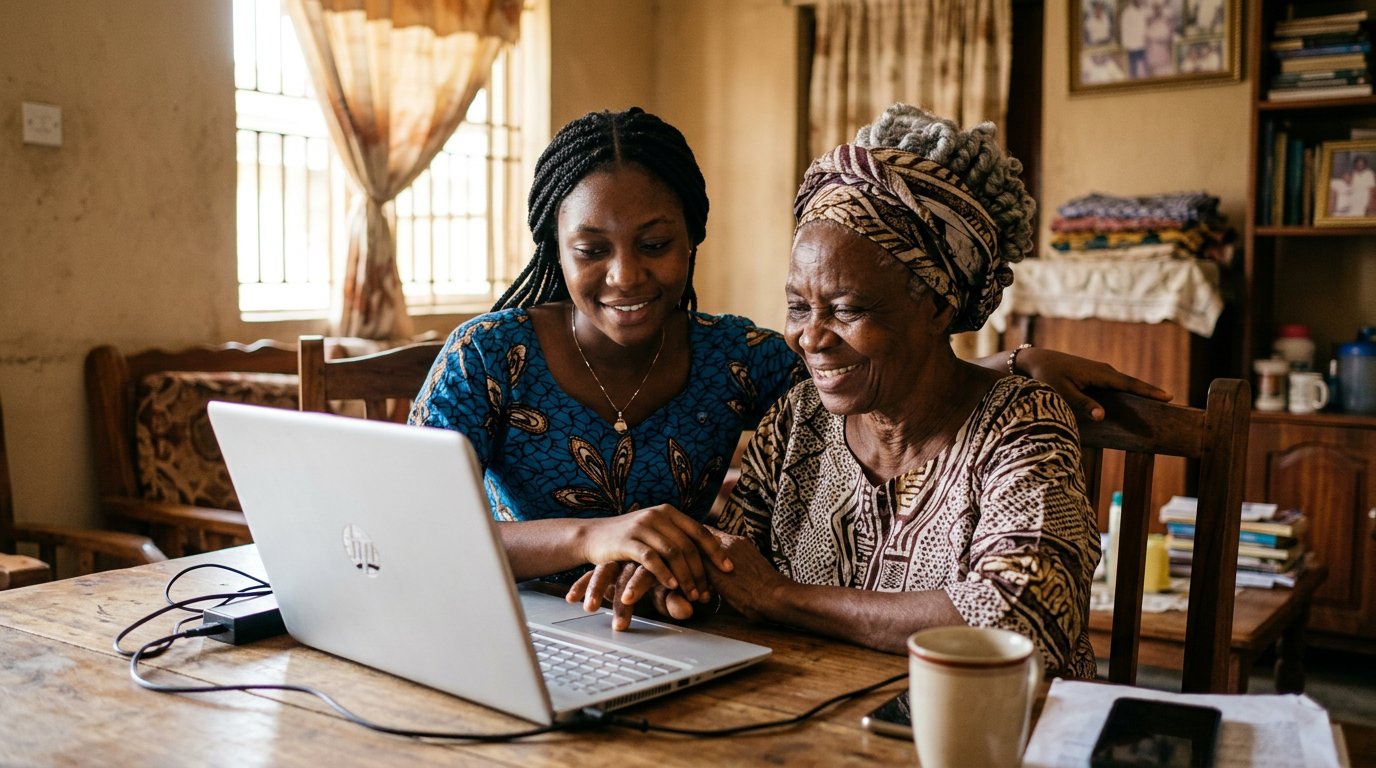
Somebody sat beside you once, or a note did. Now you are the somebody. Teaching one person, patiently, with their hands on the machine — the skill that travels every other skill.
Somebody sat beside you once — a cousin, a night class, or a note that talked like a person. Everything on this shelf reached you the way knowledge has always travelled on this street: not by brochure, but at a table, with one patient person and one machine. Which means there is only one lesson left, and it is not about the machine. You are now the somebody. The last skill is the first skill, handed over: teach the next person.
Teach one person, not a crowd. Your mother. The neighbour's boy. The woman who sells beside your shop. A crowd watches; a person types. And the typing happens on their machine or their phone, not yours — the help lesson's rule, doubly true in teaching, because the learner who watches your hands learns only to watch. Their hands on the keys, your mouth on the names, spoken out loud the way the first sitting spoke them for you: this is the mouse; this is the pointer; this is where the work lives.
The patience contract
You will be asked what you now consider obvious. The question is not the problem; the sigh is. Obvious only means already-taught — somebody paid for your obvious with an afternoon once, and this is the change coming back. Answer as if the question were interesting, because to the asker it is the most interesting thing in the room. Then stop while it is still pleasant: ten honest minutes, the keyboard lesson's own rule, because a learner made tired tonight does not come back tomorrow, and tomorrow is the whole plan.
Teach the names and the habits, not the tricks. The password rules. The pause before a link. The name read before the confirm. The backup before the sweep. Tricks fill a week; habits fill a life — a person who knows why they sign out of a machine that is not theirs does not need you beside the next machine, and that independence is the graduation. A person taught to copy you needs you forever. A person taught the reasons needs you once.

- Choose one person this month. Sit them down at a machine that is theirs to touch.
- Teach the five first: power, pointer, keys, files, and the pause before links.
- Lend them these notes — the shelf is free, and it reads like a person sitting beside them, because that is what it is.
- Teach the teacher too: show them how to sit somebody else down, and your single hour doubles every year.
The shelf, and the door
One hundred and twenty notes now. The sitting, the files, the letter, the grid, the phone, the locks, the street, and the hand that passes it on. They were written as class notes for rooms in Port Harcourt, and they belong to whoever needs them — forward them, print them, read them aloud to a person who reads slowly. The computer was never the point. The point was always this: another person who can open the door without fear, and hold it open behind them. Go and be somebody's quiet hour. The shelf will hold.