Computer skills from scratch·The working life·Lesson 145 of 180
The body at the desk
 Ellis Dennis GrahamFounder, Cyber Elias Academy 2026-07-15 4 min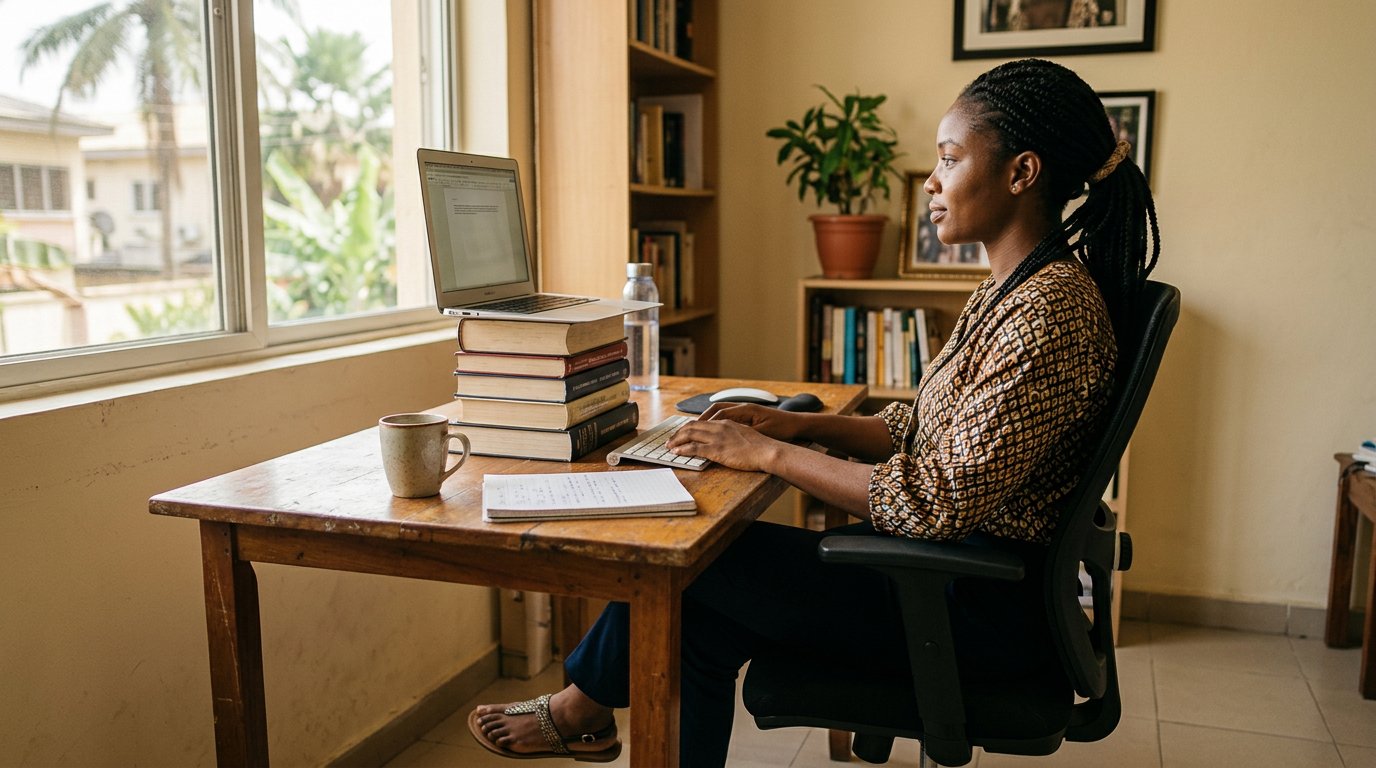
The trade you chose is a sitting trade, and sitting is a hazard. Eyes, wrists, neck and back — the small arrangements that let a person work for decades instead of years.
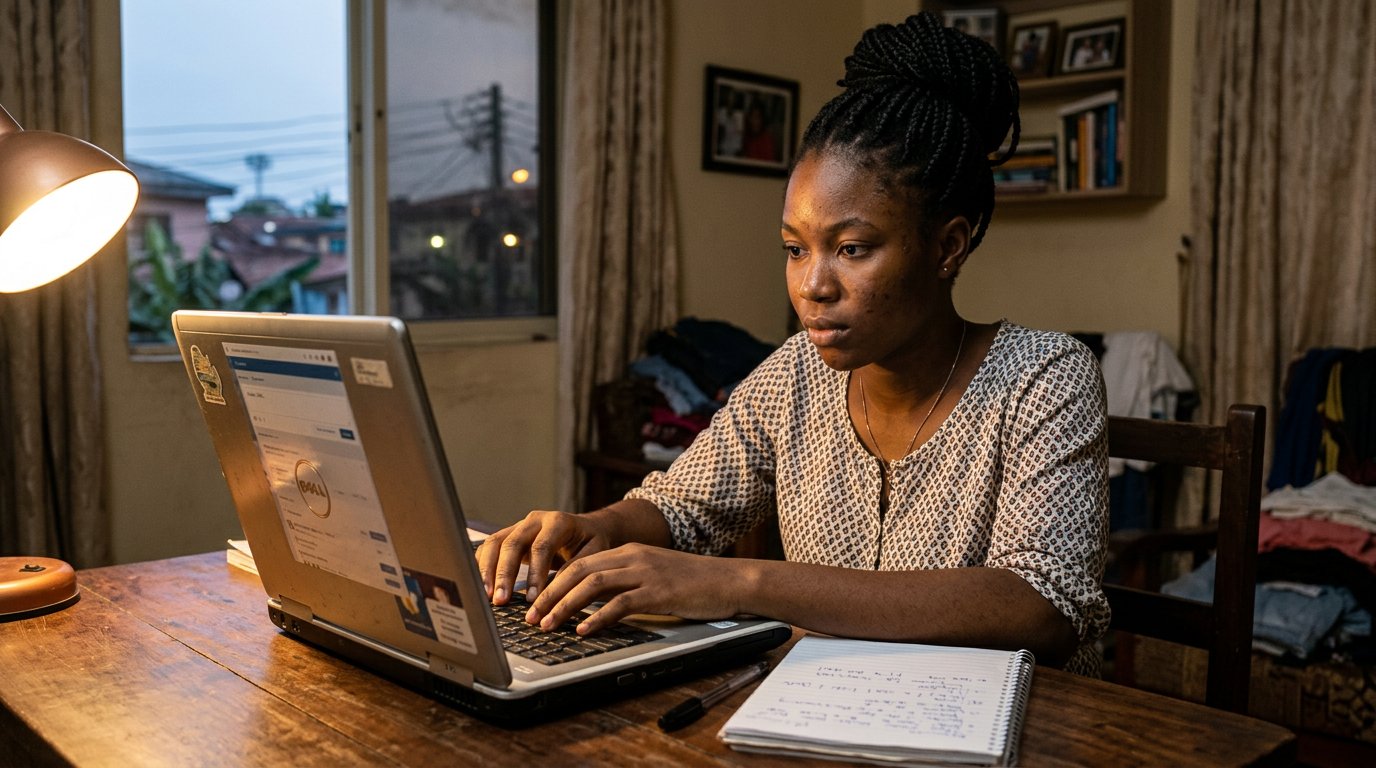
Nobody warns you that typing is a physical trade. The tailor stands, the mechanic bends, and the person at the machine sits — for years — and the sitting collects its rent quietly: the eyes that blur by evening, the wrist that wakes you at night, the neck that no longer turns without opinion. The body is the only tool every career on this shelf shares, and like every tool here it works better maintained than repaired. This lesson is the maintenance manual, and it costs almost nothing.
The arrangement first, because posture follows furniture. Screen raised so its top edge sits at eye level — on books, on a stand, on anything steady — so the neck stops hanging forward like a reading grandmother's. Back against the chair's back, or a cushion folded behind it; feet flat on the floor or on a box, not folded under you like a heron. Elbows near the sides, wrists level — not bent up over the keyboard's edge, which is where the wrist's slow trouble begins. The brightness lesson set your screen light; set your room's too, so the eyes are not reading a lamp in a cave. None of this needs money. It needs one deliberate hour of moving your furniture, once.
The eyes, the wrists, and the hourly debt
The eyes rule, learned and kept: every twenty minutes, look at something twenty feet away — out the window, down the corridor — for twenty seconds. It is called 20-20-20, it is free, and it is the difference between eyes that work at forty and eyes that throb at thirty-five; blink too, because staring screens dry them. The wrists: take the small breaks seriously — a minute of shaking out the hands every half hour, the stretch of the fingers backwards, gentle, the way you would stretch any worker's tool after repetitive lifting; and if tingling starts at night, that is not tiredness, that is a warning worth a clinic visit before it becomes a story. And the hourly debt: stand and walk for two minutes every hour — water, gate, window — because the studies all agree with grandmothers: the sitting itself is the hazard, and the body keeps books more honestly than any ledger of lesson one hundred and forty-three.
One more, in the Nigerian register: the generator and the heat. A hot room tires a body faster than a long file, and the fan aimed at the room rather than the back of the neck saves the morning's stiffness; the machine's vents were cleared in an earlier lesson — clear your own cooling too, water, actual water, through the day. The work of this shelf is a long game — decades of Thursdays at a desk. The body is the colleague who attends every one of them. Arrange the furniture once, keep the small rules forever, and it stays a colleague instead of becoming a complaint.
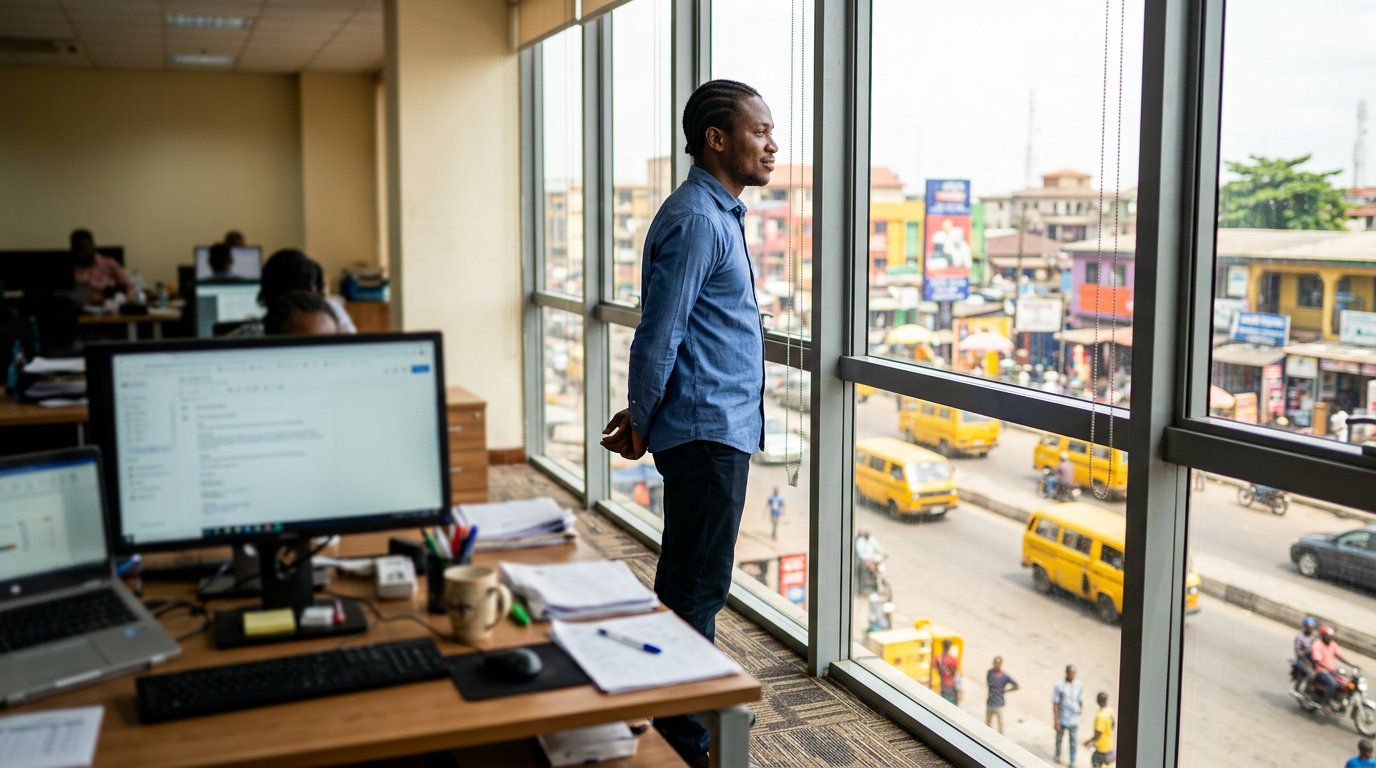
- Rearrange your desk this hour: books under the screen, cushion behind the back, box under the feet if needed.
- Set the 20-20-20 rhythm — a phone timer for a week will install it permanently.
- Hourly: two minutes standing, water taken, window visited. Debt avoided, not repaid.
- Night-time tingling in the hands is a clinic visit, not a character flaw. Go early.
The long game needs a body
The analyst lesson said the work asks for patience and calm; it quietly asks for vertebrae too. Every plan this chapter has made — the clients, the books, the decade of remote Fridays — assumes a body that can still sit, see and type when the plan matures. Maintain the only tool you cannot replace, and the sitting trade stays what it should be: a livelihood that lifts nothing heavier than a laptop, carried lightly for forty years.