Computer skills from scratch·Making a living·Lesson 134 of 180
IT support: the person who fixes the day
 Ellis Dennis GrahamFounder, Cyber Elias Academy 2026-05-27 4 min
When the printer dies before the meeting, one person becomes the most important in the building. What IT support work actually is, and why patience is the core qualification.
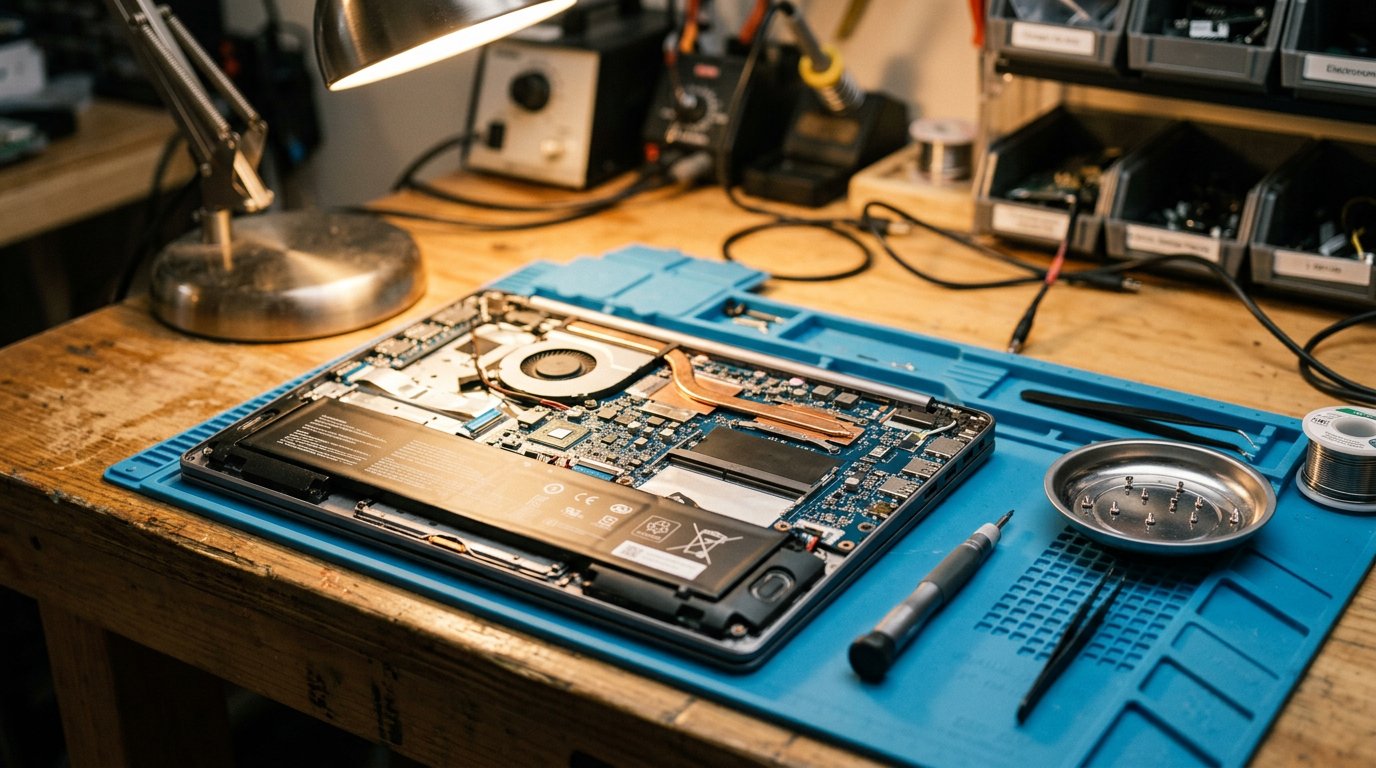
Every office has a moment when everything stops: the printer dies before the meeting, the email will not open, the system asks for a password nobody remembers. In that moment one person becomes the most important in the building — the person who fixes the day. That is IT support: the trade of keeping other people's work moving, and the most common first room in all of technology. The analyst watches for attackers; the builder raises programs; the support person keeps the ordinary daylight running, which every one of those rooms quietly depends on.
Here is the secret the job adverts do not say: you already know half the trade. Every lesson on this shelf is a ticket — a reported problem — that an IT support person has answered a thousand times. The computer is slow. The update is stuck. There is no sound. The phone says storage is full. The form will not upload. A ticket is simply one of these, reported by somebody else, and the trade is resolving it calmly while its owner watches. What the job adds to what you know is method: ask what changed last, restart honestly, check the obvious road before the exotic one, write down what you did — and a shell of deeper knowledge around it: networks, accounts, machines, the floors of lesson one hundred and twenty-six, climbed and repaired.
The core qualification nobody lists first
Patience. Because the job's real raw material is not machines — it is frightened people: the manager who clicked the link, the accountant certain she has broken the system, the director who needs it now. The support person who sighs makes one enemy and teaches the whole corridor to hide their problems, which is how small faults grow into disasters. The one who explains without making anybody small becomes the person people run to early, and early is where problems are cheap. Every manner this shelf taught — the help lesson's rules for asking, the shared machine's courtesies — is what the good side of this desk looks like. You are not paid to know everything. You are paid to stay calm, find out, and leave the person taller than you met them.
The road in, honestly: the fundamentals — machines, networks, accounts, the operating system's moods — then a first role, help desk or school or café support, where the learning is paid for instead of paid for. Certificates in the CompTIA family open doors here the way they do across the trade; the academy's IT support course carries that groundwork with machines to open and break safely. The pay begins modest, like all first rooms — but the room's view is the whole building: support people who learn how everything connects become the sysadmins, the security watchers, the infrastructure engineers, each rung paying better than the last. Almost nobody ends where support began. The trade's habit of fixing things has always included fixing one's own ladder.
- Re-read the shelf as a ticket queue: for each lesson, say how you would fix it for a stranger, in their hearing, kindly.
- Learn the floors of trouble by heart — app, machine, router, street, far house — and practise saying which floor broke.
- Keep a repair diary: machine, fault, what worked. In a month you own the most persuasive CV a first employer has seen.
- When you are ready for the room-with-machines version, the academy's IT support course is the front door. Say the shelf sent you.
The trade that keeps the lights on
No app ships, no analysis lands, no campaign runs, in a building whose machines are down and whose people are afraid of them. IT support is the floor under every floor — unglamorous by design, indispensable by arithmetic. If your temperament is the helper's, if the locked-out colleague's relief is payment you actually enjoy, this is a career that begins where you are already standing: calm, curious, and unafraid of the question everybody else is afraid to ask twice.