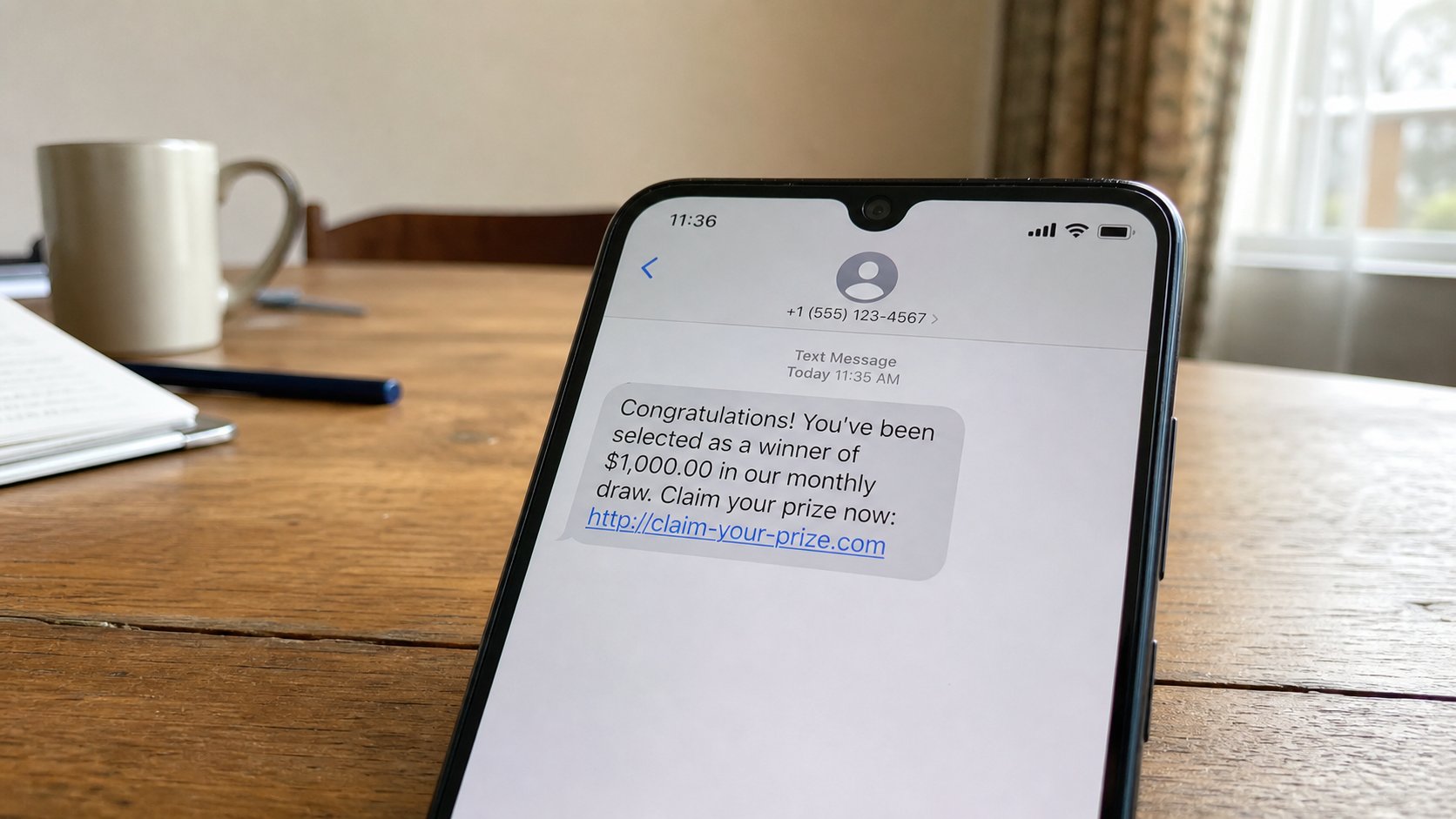
This lesson is about the message that says you have won money, a phone, or a contract, and asks you to pay something small to collect it. You will learn the pattern, the four signs, and how to check safely. The short answer is that a real prize never asks you for a fee.
These messages work by turning a gift into a bill. The fee looks small next to the prize, and each payment leads to another one, each larger than the last.
What you will need
- Any message you are unsure about.
- Ten minutes and a second opinion from somebody at home.
The four signs
- The message arrives from a number or an account you never entered anything with.
- It asks for a fee: a delivery charge, a tax, a clearance, or a registration.
- It creates urgency, saying the prize expires today or the money returns to the pool.
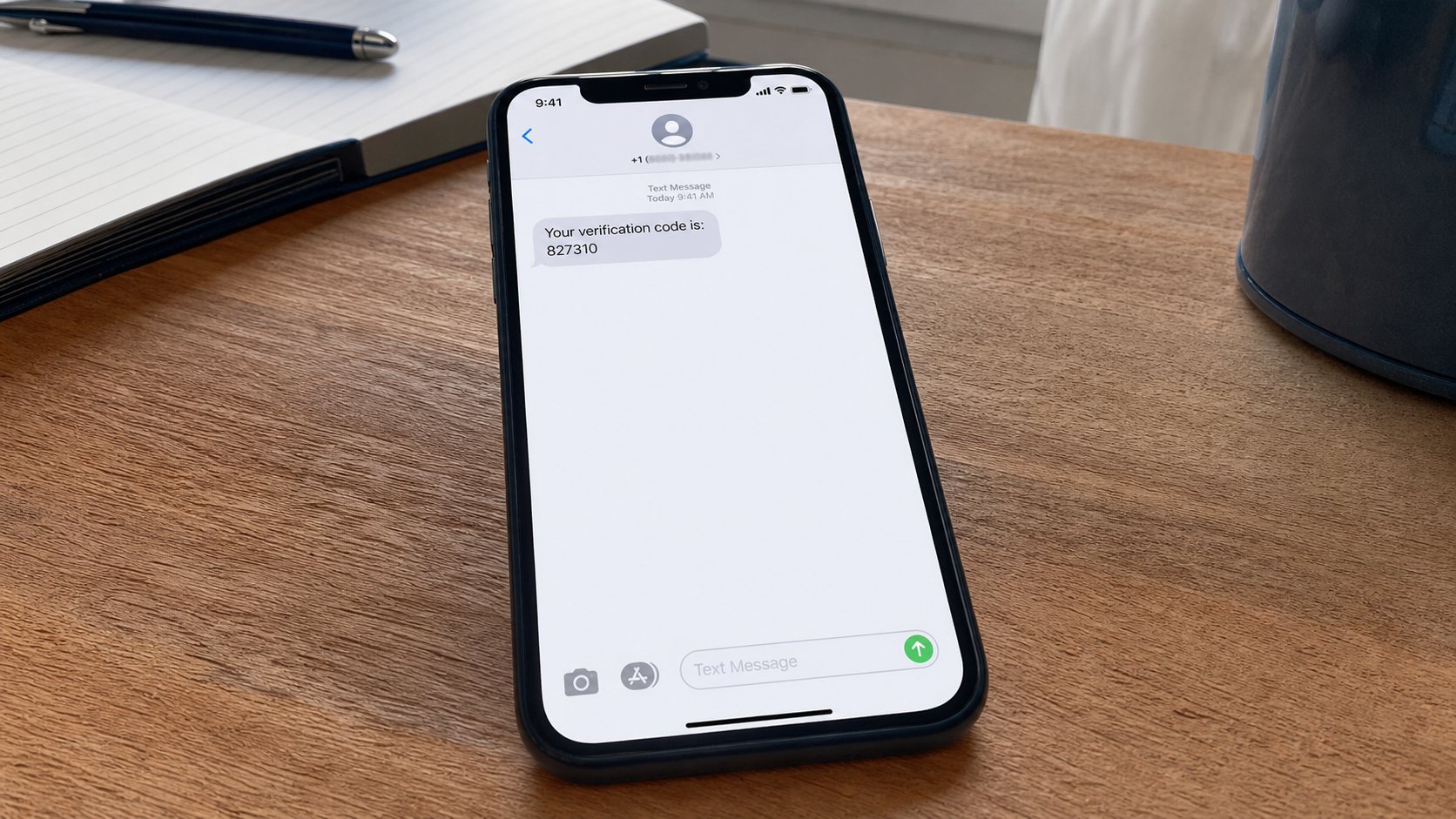
- It asks for details no prize needs, such as a BVN, a card number, or an OTP.
- The sender's email address has extra letters, such as a bank name with two letters changed.
- The spelling and grammar slip in ways an official message would not.
You will see at least two of these in almost every scam message, and often all four. Any one of them is enough reason to stop and check.
It looks like the fee is the only thing standing between you and the money. The fee is the product they are selling, and the prize does not exist.
Check without paying anything
- Ask which company is running the promotion, then look up that company's own website.
- Call the number printed on the company's official site, not the one in the message.
- Search the exact phrase from the message, which often brings up other people's warnings.
- Ask the sender a question only the real company could answer, such as an office address.
- Never send a fee to a personal account, which no company uses for a prize.
- Ask somebody else to read the message, since another pair of eyes sees the odd parts.
A genuine promotion will show its rules on the company's own page, with a closing date and a list of winners. If it exists nowhere except in the message, it is not real.

What to do with it
- Do not reply, since a reply confirms your number is active.
- Do not tap the link, which may install something or copy a login page.
- Block the number and delete the message.
- Report it to your network provider, and to the platform if it arrived on social media.
- Tell the people at home, because these messages often reach several numbers in one family.
- If money already left, report to the bank at once and keep every message as evidence.
You are not the only person to receive this message. The same text reaches thousands of numbers in one afternoon, and refusing it is a normal thing that careful people do.
Do not worry about losing a real prize by ignoring it. A real one can be claimed through the company's official page, and it will not vanish because you refused to send a fee.
The versions that look like work
Some scams offer a contract, a job, or a loan rather than a prize. The shape is the same, and so is the defence.
- A job that asks you to pay for training before starting is usually selling the training.
- A loan that requires an insurance fee before release is not a loan.
- A contract that asks for a clearance payment to a personal account is a fraud.
- A supplier who wants full payment before any goods exist deserves a check.
- A message from a relative in trouble, sent from a new number, needs a phone call to confirm.
- Any request to keep it secret is a reason to tell somebody.
Troubleshooting
Each one has an answer.
- You paid the fee: report to the bank within hours, since early reports sometimes recover funds.
- You sent your BVN: tell your bank and ask them to watch the account.
- You tapped the link: run a scan with your phone's security app and change the passwords you typed.
- You shared a card number: call the card issuer and ask for a new card.
- You feel foolish: keeping quiet is what lets the same message reach the next person.
- They keep calling: block the number and tell your network provider.
Your turn
Read the last suspicious message you received and find the signs in it.
- Count how many of the four signs appear in that message.
- Look up the sender's company on its official site.
- Find one detail that a real company would never ask for.
- Block and delete the message.
- Show one person at home how you spotted it.
You can now read a promise and see the bill behind it. In the next lesson you will rest your hands and eyes before the ache becomes an injury.
Free browser practice lab
Check readiness in Self-Assessment Studio
Take a quick browser diagnostic and get instant feedback.