This lesson looks at pictures and voices that can be faked. You will learn how a fake image or a copied voice is made, the checks that still work, and the family code word that settles a panicked call.
A photograph used to be evidence. A voice on the phone used to be proof of who was speaking. Both are now easy to copy, and the checks have moved from the picture to the conversation around it.
Before you begin
- About twenty minutes.
- One family member to agree a code word with.
- A second way to reach the people who matter.
How the fakes work
- An image can be generated from a written description, in any style.
- A face can be placed on another person's head in a video.
- A voice can be copied from a few seconds of recording.
- A message can be written in a relative's style after reading their posts.
- A profile can be copied, with the same name and photograph.
- All of it is cheap, fast, and improving every year.
You will see a photograph that looks slightly too smooth, with strange hands or jewellery that melts into the skin. Those details are clues, and none of them is proof, so the checks below matter more than the clues.
It looks like a clear picture must be real. A clear picture is the norm now, and the deciding question is who sent it and why.
The checks that work
- Call the person back on a number you already have, not the one in the message.
- Ask a question only they could answer, such as the name of a shared neighbour.
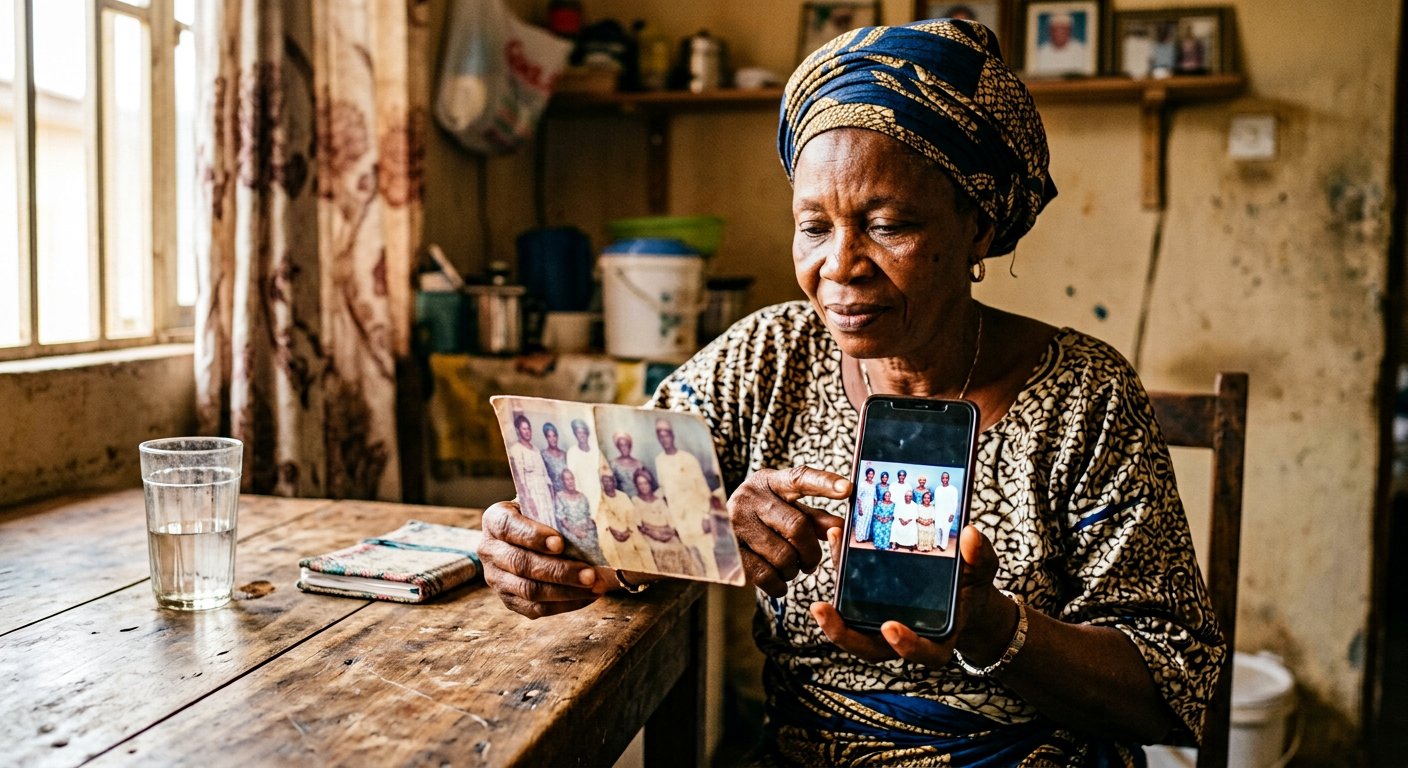
- Send the picture to somebody who was there, and ask when it was taken.
- Search the image itself, which finds the older original when it exists.
- Slow down: every fake needs urgency, and every real emergency survives five minutes.
- Refuse to send money on the strength of one message, however convincing.
A reverse image search will show a results page with the same picture on older pages, sometimes years old. When the same face appears in five countries, the picture is not evidence of anything.
The family code word
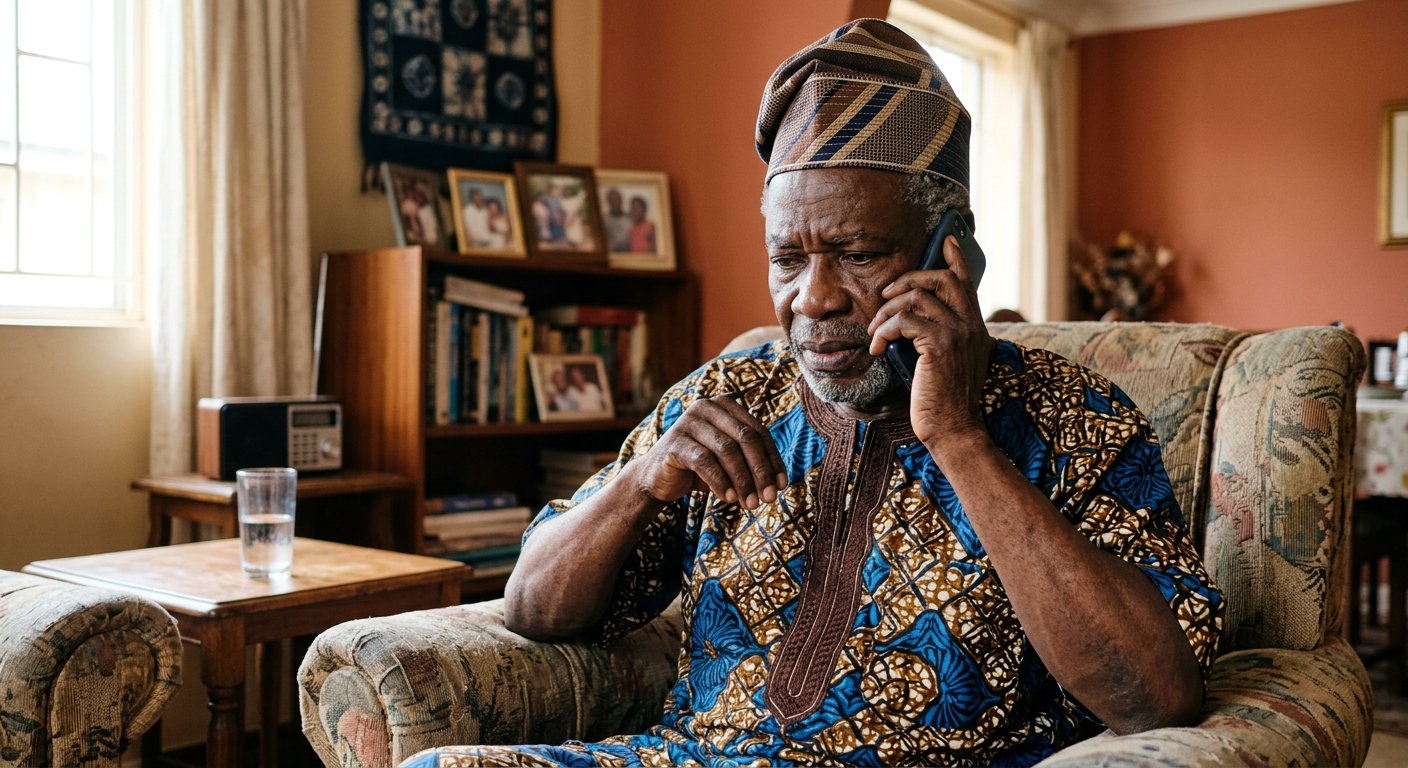
Agree one word, known to the family and useless to anybody else.
- Choose a word that is not on anybody's social media.
- Teach it to the people who might be impersonated, not only the ones who worry.
- Use it when a call asks for money, and use it calmly.
- Change it if it has been shared outside the family.
- Write it in the notebook the family keeps, in a sealed page if you prefer.
- Practice once, so the word comes to mind when the call is frightening.
None of this needs special software. A call back on a known number, one question, and five minutes of patience stop most of these attacks.
Do not worry about seeming suspicious. The people who love you would rather be asked a question than send money to a stranger.
When it fails
None of these is a dead end.
- You sent money: report it to the bank at once, and keep every message.
- You gave a code: change it immediately, in the app where it is used.
- A relative's account is copied: report the profile, and tell the real person.
- You shared a picture that is now being reused: tell the people who trust you.
- A video looks real and frightens you: check the original source before reacting.
- You feel foolish: that feeling is the tool the attacker used, and naming it helps.
Try it now
Agree one code word this week.
- Choose a word the family will remember.
- Tell two people about it, face to face.
- Practise one pretend call with the word.
- Write it in the family notebook.
- Agree the rule: money requests are always checked by a call back.
You can now hear a convincing lie and still check it. In the next lesson you will keep your own judgment in a world of recommendations.