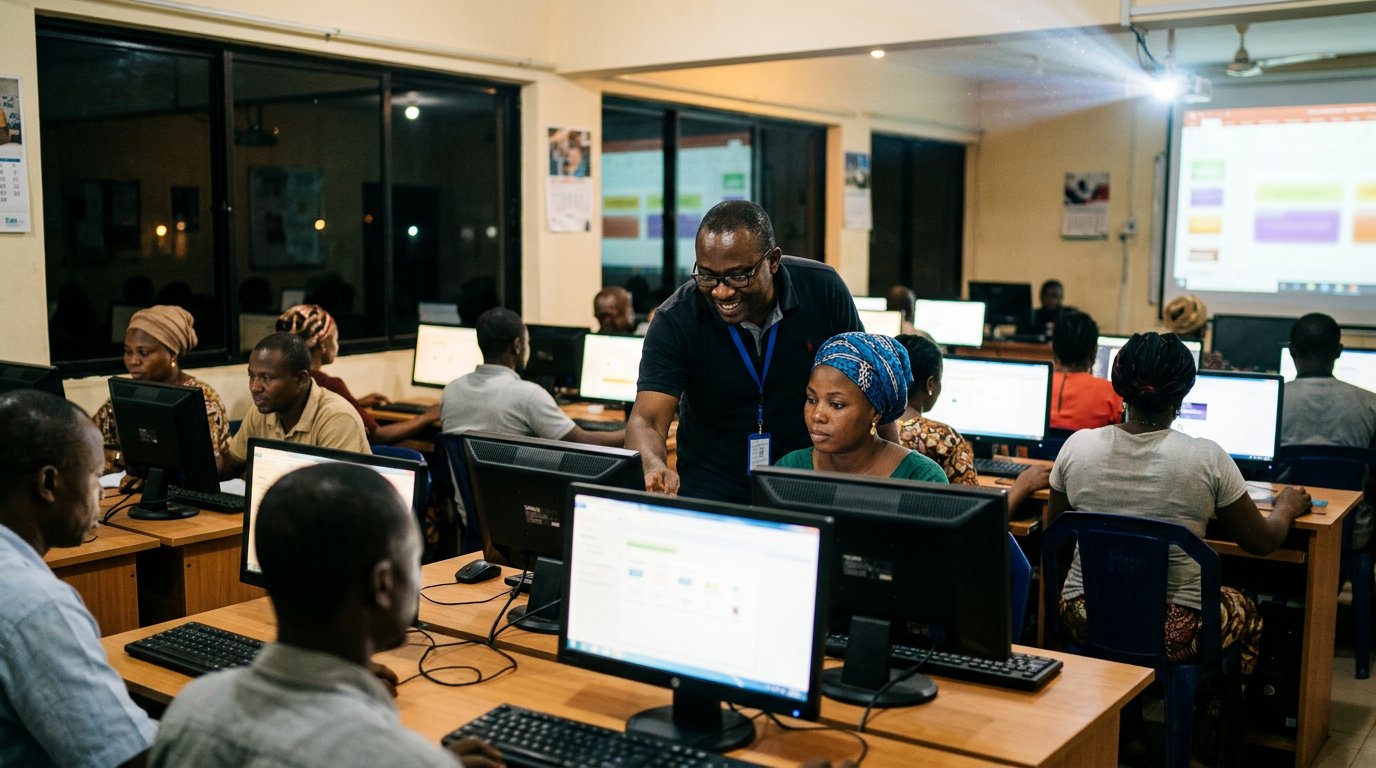
This lesson takes a mobile app idea from a sentence to something running on a phone. You will write the problem in one sentence, test it by hand, choose a build path, and launch to a small group of real users in Nigeria.
Most app projects fail before any code is written, because the idea is a list of features rather than a problem. One clear sentence fixes that, and it costs nothing.
Before you start
- A notebook and a pen.
- Ten people you can talk to who have the problem.
- About an hour for this lesson, and several weeks for the work.
The first sentence
Write it like this: people who do this, struggle with that, and a simple tool would help them do the other.
- Name the person, such as a market trader or a lesson teacher.
- Name the struggle, in their words rather than yours.
- Name the one thing the app would do.
- Leave out every other feature, however good.
- Read it to three people in that group and watch their faces.
- Rewrite the sentence until somebody says they would use it today.
You will see the sentence get shorter as you rewrite it, and that shortening is progress. An idea that fits in one line can be built, and an idea in five lines cannot.
It looks like the app needs to be built before anybody can judge it. A paper sketch and twenty conversations tell you more in a week than three months of building.
Test it by hand first
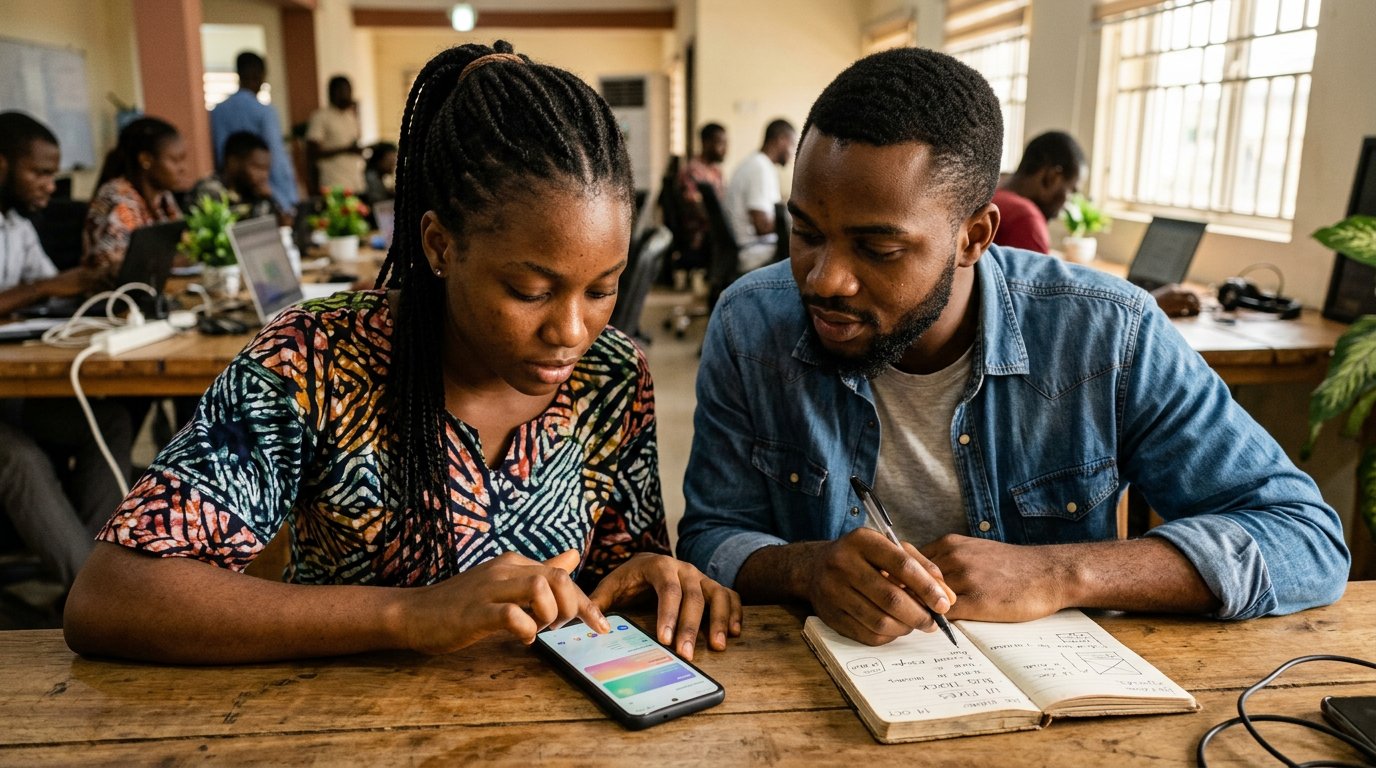
- Write the screens on paper and walk people through them.
- Take orders or bookings by hand, using a notebook and your own phone.
- Do the job manually for two weeks, and count how often it happens.
- Ask what people would pay, and whether they would pay monthly.
- Check whether they have data and a smartphone that can run it.
- Stop if nobody uses the manual version, since the app will not fix that.
The manual version will show you the real problems: a name with four spellings, a payment made by transfer, a customer with no email address. Those details decide the design.
You will see a pattern after two weeks: the same three questions, the same two types of buyer. That pattern becomes the app's first screen, and everything else waits.
Choose how to build it
- A no-code tool, which suits a simple form, a list, or a booking, and costs a small monthly fee in dollars.
- A cross-platform framework, which builds one app for Android and iPhone from one codebase.
- A local developer, who may charge between a few hundred thousand naira and several million, depending on scope.
- A partnership, where a developer takes a share rather than a fee, which needs a written agreement.
- Website first, if the main job can be done in a browser, which avoids store fees entirely.
- Android first, because it covers most of the market here and costs less to test.
None of these need an office. A single developer working from home is how most Nigerian apps start, and it is cheaper than a team.
Do not worry about the store fees at the start. You can distribute an Android app as a file to your first fifty users, and move to the store when it works.
Launch small, then grow
- Give it to twenty users who agreed to try it.
- Watch three of them use it, without helping, and write down where they hesitate.
- Fix the one problem that appears most often.
- Add payments only when people ask to pay.
- Keep a phone number for support, since trust is built by answering.
- Publish on the store once the first fifty users stay.
If it goes wrong, the first check is whether the problem is real rather than whether the app is good. The sentence at the top of this lesson is the thing to revisit, and most fixes happen there.
If it goes wrong
Start with the first one.
- Nobody downloads it: the problem is not painful enough, or the people were never asked.
- People download and leave: the first screen asks for too much. Remove a step.
- The developer disappears: the agreement had no milestones. Use written stages and a deposit.
- The app is too slow on cheap phones: reduce images and test on the cheapest device you can find.
- Store review rejects it: read the reason and fix that one item, then resubmit.
- Users cannot pay: add a transfer option as well as a card, since cards fail here often.
Practice
Write the sentence today, and talk to three people this week.
- Write the problem in one sentence.
- Sketch three screens on paper.
- Show the sketch to three people in the group you named.
- Note the first question each one asks.
- Decide whether to continue, based on whether they would use it today.
You can now take an idea seriously without wasting a year. In the next lesson you will choose where to learn, and how to spot a course that sells nothing.