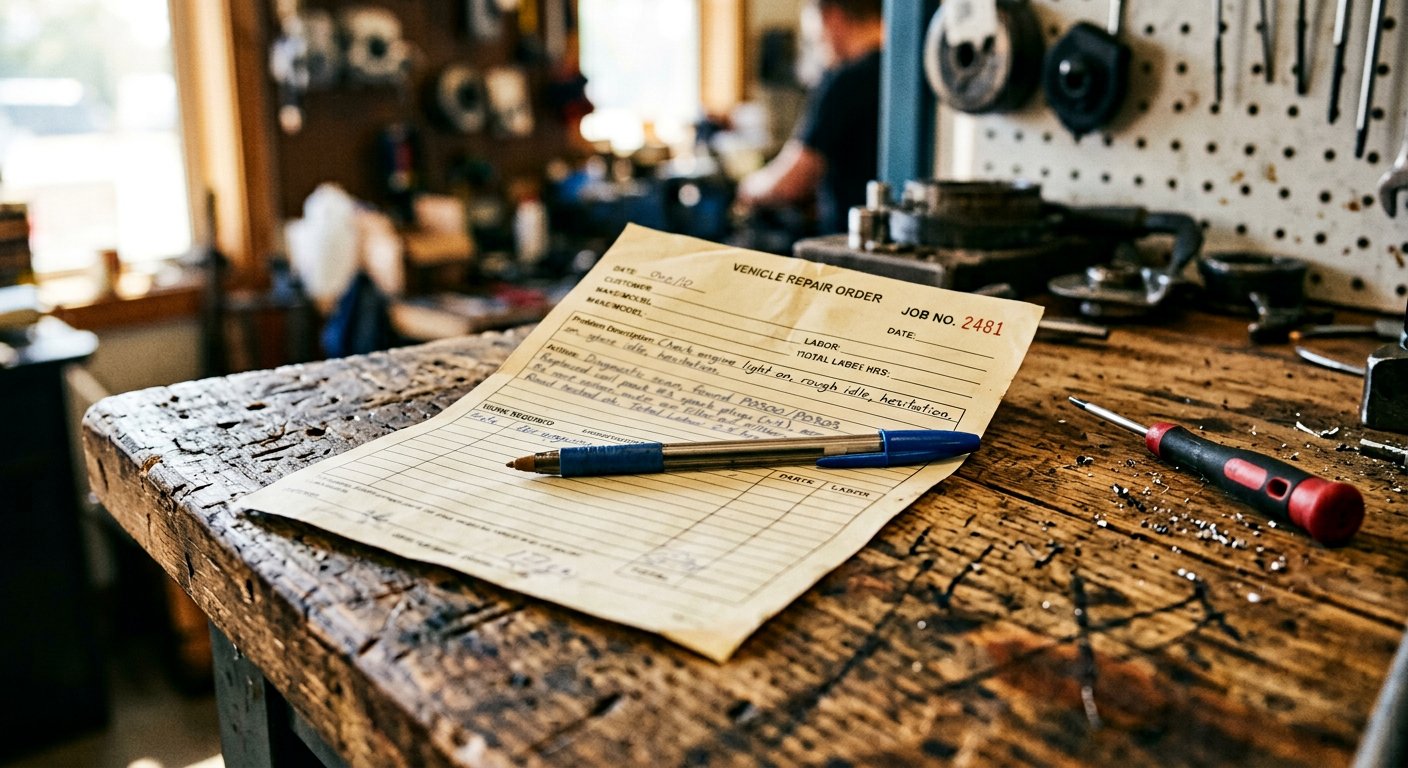
This lesson looks at the job card and the boundary. You will learn what to write before you start, how to quote without guessing, and how to stop a small repair from becoming unpaid work.
A job card is a page with the fault, the price, and the date. It protects you and the customer, and it ends more arguments than any technical skill.
Before you begin
- A notebook or a pad of printed cards.
- A pen that works.
- About ten minutes per job.
What goes on the card
- The date and the customer's name.
- The machine, with its model and serial.
- The fault in the customer's own words.
- What you will do, and what you will not do.
- The price, and whether parts are included.
- The date they can collect it.
The card will show the fault in the customer's words and your plan in yours, side by side. That pairing is what makes the card fair to both of you.
It looks like a written card slows the work. It saves the conversation where a customer remembers a different price.
Quoting without guessing
- Ask what the machine does, and price the most likely fault.
- Say plainly that the price may change if the fault is different.
- Give a range for the first look, and a fixed price for the repair.
- Charge for the inspection when you must open the machine.
- Write the diagnosis fee on the card before you begin.
- Agree the price by message if the customer is not present.
A message from the customer will show the price they agreed to, and that message is worth keeping. Screenshot it into a folder named for the month.
Your phone's message thread will show the quote and the customer's reply underneath it, which is why the reply matters more than a spoken yes. Screenshot that thread and the picture will appear in the folder with a date on it.
When the job grows
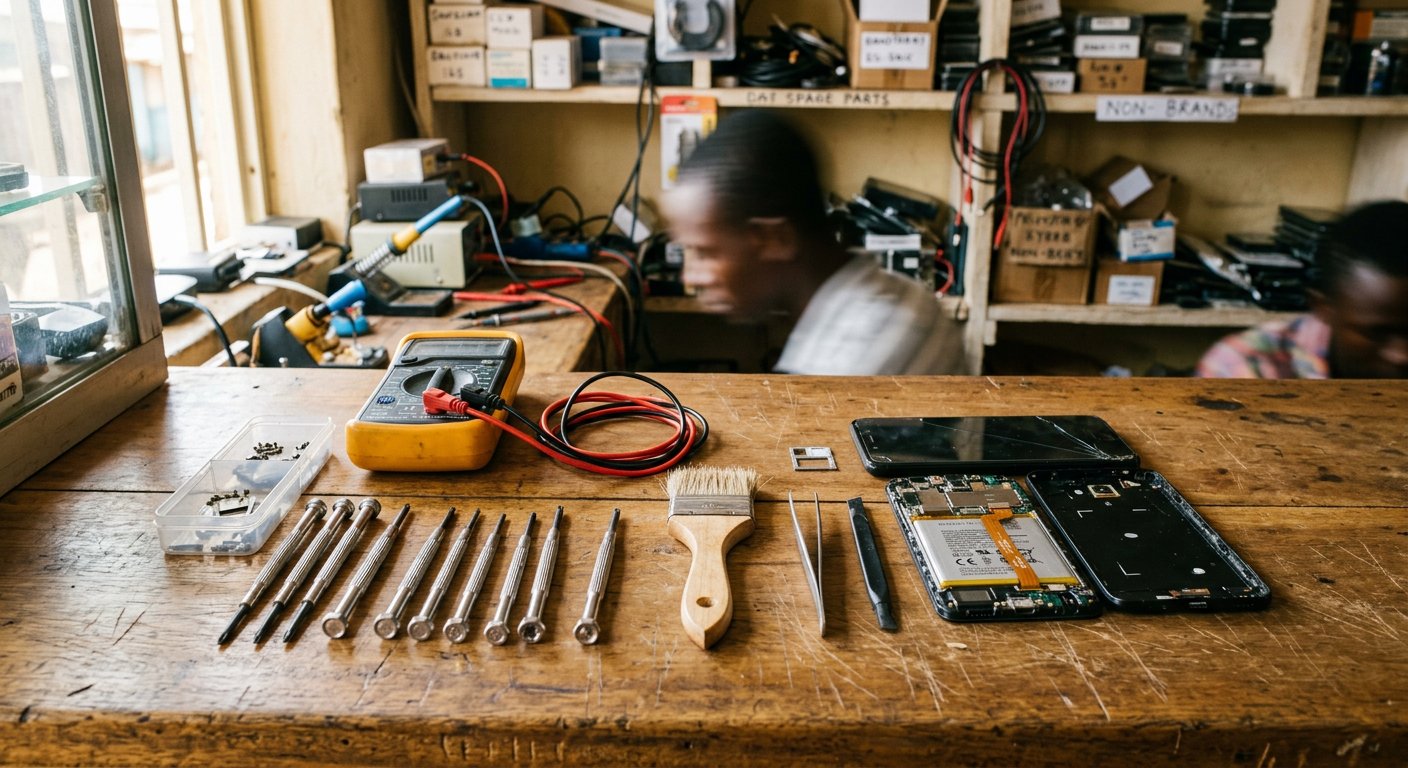
A fault found during a repair is a new decision, and the customer makes it.
When you send the new price, the chat window will show your message as a single line until they open it. You will see two small ticks when it is delivered, and the answer usually follows within the hour.
- Stop when the work is larger than the card describes.
- Photograph what you found, so the customer can see it.
- Send the new price and wait for a reply.
- Continue only after the customer agrees in writing.
- Offer to close the machine and return it as it came.
- Write the new agreement on the same card.
None of this needs a printed form. A page with six lines and a signature is a job card, and it holds up when everybody remembers differently.
Do not worry about asking for a signature. Most customers are relieved that somebody wrote the price down.
When it fails
All of these are fixable.
- The customer remembers a lower price: show the card, without arguing.
- The repair fails after a week: say what you will check and at what price.
- Parts cost more than quoted: ask before ordering, and keep the message.
- The customer is unavailable: set a collection date on the card and keep to it.
- A machine is left for months: write a storage note and a date to sell or return.
- Somebody else worked on it first: note the state of the screws and the seals.
Try it now
Design a card you will actually use.
- Write six lines: date, name, machine, fault, work, price.
- Fill one card for a real job this week.
- Ask the customer to sign it.
- Photograph the card into a folder named for the month.
- Keep the cards for a year, since they answer later questions.
You can now work on paper as well as on machines. In the next lesson you will help somebody from across town.
Free browser practice lab
Check readiness in Self-Assessment Studio
Take a quick browser diagnostic and get instant feedback.